

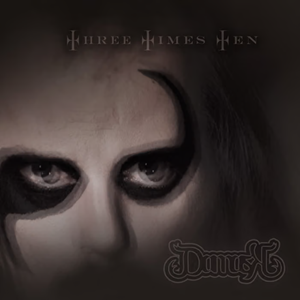
Damask is an open music project born in 2025 in Tricity — the urban triangle of Gdańsk, Gdynia, and Sopot, Poland — conceived by Weno Winter (also known from Sautrus) and completed by bassist Adrian Jegorow (Hellvoid, Sautrus). “Three Times Ten,” the project’s debut album, was released on May 19, 2026 as an independent release, and arrives as a fully-formed artistic statement rather than a tentative first step: eight tracks, thirty-five minutes, and a conceptual framework built on two decades of accumulated ideas. The album pairs the gravitational weight of Doom Metal with the intimacy of acoustic compositions and the earthy sensibility of Folk, navigating between dense, low-tuned sonorities and disarmingly simple song structures with a fluency that speaks to the project’s unusual depth of gestation. The thematic architecture of “Three Times Ten” is as intentional as its sonic one. Each of the eight compositions functions as a self-contained narrative: reflections on religious fascination and blindness, the fear of death and the gradual acceptance of its inevitability, self-deception, and the particular form of madness that accompanies any sincere attempt to understand the world. Together, they form a cohesive and quietly devastating meditation on human experience — diverse in texture yet unified by a singular contemplative sensibility. The album opens with “Forsaken Me,” a track that immediately establishes the project’s tonal intentions. The guitar work is purposeful and assured from the first bars, anchored by a rhythmic section that carries significant groove and structural weight. The composition navigates a series of well-executed tempo changes that serve the architecture of the piece rather than disrupting it, allowing the dynamic range to expand organically between heavier passages and more open, Progressive sections. The vocal performance is dynamic and expressive throughout, alternating with the instrumental sections in a controlled dialogue; the guitar closes the track with an intense and refined solo that consolidates the emotional trajectory established from the opening bars. “She Is My Butterfly” shifts the register decisively, opening with interlaced acoustic and electric guitar arpeggios that introduce a sound firmly rooted in Dark Folk. The atmosphere is enveloping and immersive, enriched by the interplay between the male and female voices — a contrast that Damask deploy with considerable sensitivity throughout the record. The rhythmic foundation relies primarily on percussion, which accentuates the Folk character of the piece and allows the melodic and harmonic content to breathe. The result is a track of genuine mood and stylistic coherence, with its melancholic undertow and atmospheric density. “All You Need Is” is the album’s longest track at over six and a half minutes, and arguably its most fully realised statement of artistic intent. The composition explores the intersection of Folk Doom with genuine conviction, locating a personal and distinctive point of synthesis between the two genres without compromising either. The drumming is percussive and rhythmically inventive, the guitar riffs heavier and more assertive than elsewhere on the record, and the vocal delivery warm and expressive — male lead vocals in the verses giving way to mixed choruses with the addition of the female voice. The track is rich in tempo changes and tonal nuance, moving through Folk, Doom, and Progressive territory with naturalness and command. Distorted and technically accomplished electric guitar solos punctuate the instrumental passages, and the second half evolves into an intense, refined Folk Prog framework that sustains momentum through shifting vocal and instrumental counterpoint all the way to its conclusion. “The Very First Moments Of Consciousness” functions as an interlude — at under two minutes the album’s briefest piece — but earns its place rather than merely occupying it. Layered, dreaming guitar arpeggios interweave and accumulate, evoking a Folk sensibility of warmth and spatial calm; a bass line enters quietly, and a choral element settles into the background. It is a precisely calibrated bridge between the surrounding pieces, and it performs that function with elegance. “Witness Of Lie” re-enters on heavier, Doom-inflected guitar riffs, blending the band’s Folk character with a darker, more ritualised Doom aesthetic. The male vocal here is among the most intense and expressive on the record, carrying the emotional weight of the composition with authority. Deep bass lines and a sense of ceremonial atmosphere permeate the track; tasteful female vocal contributions heighten the drama at key moments. The piece evolves across its duration, with more open and expansive passages in the second half, and guitar solos that eventually yield to the vocal interplay that carries the track to its close. It is well-constructed, emotionally grounded, and among the album’s most impactful moments. “Horrah” opens on a driving rhythmic foundation with distorted guitars, revealing a more Heavy Rock-oriented facet of Damask without abandoning their compositional identity. The vocal delivery is sharp and commanding, the performance dynamic and fully committed. The guitar work and a rhythm section in continuous evolution add an Experimental and Progressive dimension; extended instrumental passages with the lead guitar at the centre — cutting and precise — build toward a drumming crescendo that closes the track with escalating force. “Master” offers one of the album’s most distinctive moments of contrast. Opening softly in Folk Prog territory, it places the two voices in close dialogue, their interplay natural and musically convincing. Guitar arpeggios and a more percussive rhythmic approach frame a delicate and, in places, dreamlike sound that recalls the more sophisticated end of the 1970s Folk Rock scene — yet recontextualised in a modern and personal voice. Pathos, refined musical textures, and a sense of measured intensity define the piece, which leads the listener gently toward the album’s conclusion. The album closes with “Eye In The Sky,” which introduces a more pronounced Progressive Rock sensibility into the palette, with Alternative inflections woven into Damask’s established character. The compositional craft and songwriting here allow the musicians’ technical command to operate in service of the song rather than as display; the vocal performance is particularly expressive, and a well-constructed guitar solo in the second half provides the record’s final melodic statement — a fitting close to an album full of ideas pursued with integrity and skill. “Three Times Ten” is a debut that carries none of the tentativeness that typically characterises first records. Damask have arrived with a clearly defined identity — somewhere in the confluence of Folk Doom, Progressive Rock, and Dark Folk — and with the compositional maturity to execute that vision consistently across eight varied and substantive pieces. The dual vocal interplay between the male and female voices is one of the record’s most distinctive assets, and the guitar work throughout — both acoustic and electric, rhythmic and soloing — demonstrates a rare capacity to serve the song across multiple tonal registers. The thematic ambition of “Three Times Ten” is matched by its musical execution: this is a record that rewards close and repeated listening, and announces Damask as a project deserving of serious international attention.
Purchase and Stream “Three Times Ten” here: https://distrokid.com/hyperfollow/damask6/three-times-ten
Tracklist
01. Forsaken Me (04:47)
02. She Is My Butterfly (03:28)
03. All You Need Is (06:33)
04. The Very First Moments Of Consciousness (01:47)
05. Witness Of Lie (03:24)
06. Horrah (03:39)
07. Master (05:32)
08. Eye In The Sky (06:25)
Lineup
Weno Winter / Vocals, Guitar, Mix, and Master
Adrian Jegorow / Bass Guitar
Jakub Modrzejewski / Solo Guitar
Paweł Łach / Drums