
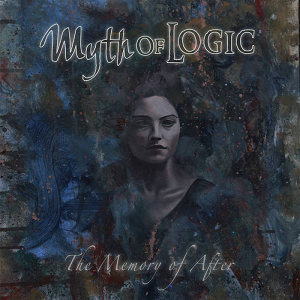
“The Memory Of After” marks a striking evolution in the sound of Myth Of Logic, weaving a sophisticated tapestry of modern Progressive Rock enriched by subtle yet unmistakable nods to the genre’s golden age. At its core, the album tells the story of Mercy, a being from a distant, inhospitable world governed by the enigmatic Architects, whose society evolved beyond verbal communication into pure empathic perception. This narrative unfolds with remarkable depth, paired with Scott G. Davis’ meticulous production and Charlie Roy’s compelling visual work, resulting in a seamless fusion of atmosphere, motion, and artistry. From the opening moments, the listener is drawn into a universe where keyboards, synths, violin, and saxophone interact in complex, often symphonic arrangements, underpinned by a rhythm section capable of both subtle nuance and commanding power. Vocals—warm, expressive, and at times haunting—serve not only as a narrative vehicle but as a textural instrument, guiding the listener through the conceptual arc of the album. The ensemble, featuring Davis on keyboards, bass, guitars, and vocals, Chris Barbosa on violin, David Pate on tenor saxophone, Jerry Outlaw on lead guitar, Louis Alexi on drums and percussion, and Tara Jennings contributing voiceover, achieves a level of interplay and cohesion that defines the album’s identity.
With “The Memory Of After,” Myth Of Logic demonstrates an exceptional ability to balance progressive tradition and contemporary innovation, crafting a work that is simultaneously intricate, emotive, and compelling—a true statement in modern Progressive Rock. The album opens with “The Memory Of After (Part I) – Keep A Silent Watch,” starting from an atmospheric keyboard intro that gradually blossoms into a complex Progressive Rock suite. Violin lines intricately intertwine with synthesizers, creating rich textures that recall classic Prog while embracing a modern sensibility. The vocals enter with expressive nuance, perfectly conveying the narrative’s thematic depth. Alternating between sung passages and elaborated instrumental segments, the track features a driving bass line and sophisticated drumming, with time signature shifts that engage the listener throughout this nearly 15-minute journey. Following this, “Shadow Box” draws clear inspiration from Gabriel-era Genesis yet maintains a distinct, personal voice. Warm, expressive vocals float atop immersive keyboard layers, while synth solos punctuate the shifting time signatures. The rhythm section balances complexity and groove, sustaining nearly ten minutes of evolving musical exploration with elegance and poise. “An Empath In Exile” accelerates the album’s momentum with a robust, granular rhythm section and a killer bass line that propels the composition forward. Synth melodies lead the harmonic narrative, while vocals alternate between solo lines and rich choral passages. Shifting meters allow intricate instrumental interplay, making this compact track a concentrated showcase of the band’s technical and expressive abilities. The album’s shortest track, “Machine Language,” surpasses four minutes and emphasizes the band’s experimental tendencies. Layered synths and organ evoke late ’70s and early ’80s Progressive experimentation while blending seamlessly with modern sonorities. This track functions as a dense, compelling mini-suite that bridges eras and demonstrates Myth Of Logic’s adventurous approach. With “Disconnect,” the band returns to more classic Progressive textures, balancing vintage influences with contemporary songwriting. A propulsive bass anchors the groove, while keyboards and vocals continue to unfold the album’s conceptual narrative. Catchy motifs and harmonically rich passages make the piece immediately engaging, uniting accessibility with compositional sophistication. “The Sky Is Falling” begins with a delicate piano motif before introducing tenor saxophone lines that elevate the arrangement with a Jazzy refinement. The vocals remain warm and expressive, interacting seamlessly with instrumental passages. A protracted sax solo transforms the sonic landscape, adding depth and nuance, and showcasing the band’s mastery of blending diverse elements into a cohesive whole. “Mercy Paradox” (15:19) is a long-form composition that opens with a dynamic, incisive motif led by keyboards and vocals. Midway, lead guitar emerges, injecting a dramatic, pathos-laden dimension to the track. Returning to its opening theme, the piece highlights the band’s command of tension, release, and thematic development, creating a profoundly engaging listening experience. Finally, “The Memory Of After (Part II) – The Skeleton Flower” closes the album with its most ambitious and epic work. Nearly twenty minutes of symphonic passages, experimental interludes, and intense, incisive segments encapsulate the full range of Myth Of Logic’s vision. Violin, keyboards, and voiceover interact to craft a multi-layered narrative arc, culminating in a powerful statement that confirms the band’s stature in modern Progressive Rock. “The Memory Of After” demonstrates Myth Of Logic’s ability to fuse modern Progressive sensibilities with clear reverence for the genre’s heritage. Through meticulous arrangements, virtuosic performances, and a keen sense of narrative storytelling, the album offers a compelling journey that is both technically impressive and emotionally resonant. For listeners seeking Progressive Rock that respects tradition while pushing boundaries, this release stands as a sophisticated and deeply engaging statement.
Tracklist
01. The Memory Of After (Part I) – Keep A Silent Watch (14:43)
02.Shadow Box (9:41)
03. An Empath In Exile (4:32)
04. Machine Language (4:14)
05. Disconnect (4:52)
06. The Sky Is Falling (6:39)
07. Mercy Paradox (15:20)
08. The Memory Of After (Part II) – The Skeleton Flower (19:44)
i. There Will Come Soft Rains
ii. Hold To Kill
iii. Until There Is
Lineup
Scott G. Davis / Keyboards, Bass Guitar, Electric & Acoustic Guitars and Voices
With:
Louis Alexi / Drums & Percussion
Chris Barbosa / Violin (1,8)
Jerry Outlaw / Lead Guitar (7)
David Pate / Tenor Saxophone (6)
Tara Jennings / Voiceover (8-i)
[…] Read our Review of the album here: [Review] Myth Of Logic – The Memory Of After […]