

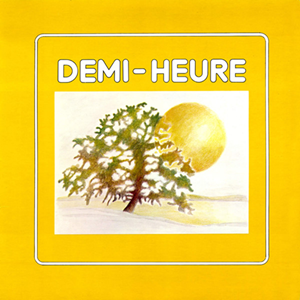
Within the vast galaxy of Progressive Rock, few scenes have managed to fuse pastoral lyricism, cultural identity, and symphonic complexity quite like that of 1970s Québec. It is within this fertile yet already declining terrain that, in 1978, a work destined to become one of the best-kept secrets among collectors took root: the sole, self-titled album by Demi-Heure.
The Context: The “Belle Époque” of Progressive Québécois
To grasp the importance of Demi-Heure, it is essential to frame the musical landscape of the French-Canadian province during that decade. Québec Prog was not merely a musical genre, but an expression of national and cultural identity. While elsewhere in the world Punk and Disco were beginning to erode the dominance of lengthy suites and concept albums, Québec held firm with a vibrant and highly original scene.
Sources remind us that the music of Demi-Heure is deeply rooted in a tradition shaped by giants such as Harmonium (particularly in their early period), Beau Dommage, and Le Temps. It was a sound defined by an inseparable interplay between Rock instrumentation (bass, drums, keyboards) and an Acoustic-Folk soul dominated by woodwinds and twelve-string guitars. Bands like Sloche, Maneige, Opus 5, and Contraction had already carved a profound path, elevating Francophone music to heights of eclecticism that blended Jazz-Rock, Symphonic ambition, and Folk roots. Within this framework, Demi-Heure emerge as a late yet luminous reflection, capturing that rural and melancholic magic before the decade drew definitively to a close.
The Line-Up: An Ensemble of Dreamers
Demi-Heure consisted of a group of then little-known musicians from the Québec City region. Despite their commercial anonymity, the technical proficiency and instrumental diversity of the line-up were on par with the major names of the scene.
The band’s core boasted remarkable timbral richness:
André Ringuet: A central figure, moving effortlessly between woodwinds (alto saxophone, clarinet, recorder) and strings (acoustic and twelve-string guitar), while also contributing to the vocal sections.
Jacques Roy: Lead vocalist and guitarist, responsible for the interpretative warmth typical of Québécois folk.
Hélène Parent: Lead vocalist who, alongside Roy, crafted those ethereal vocal interplays reminiscent of Harmonium’s most delicate productions.
François Tachereau: Keyboards and vocals, the architect of the Symphonic atmospheres that elevate the record beyond simple folk.
Christine Fortin: A fundamental presence for the band’s pastoral sound, thanks to her work on oboe and flute.
Richard LaRue (bass) and Claude Lépine (drums and percussion): A rhythm section capable of subtly and elegantly supporting the album’s constant shifts in mood.
Such an extensive line-up (seven members) reveals a clear intent: to avoid any compromise with sonic minimalism, instead striving for an orchestral fullness typical of Symphonic Folk.
The Album: Demi-Heure (1978)
Released entirely independently via the private label Les Productions Demi-Heure (catalogue number DH-1011 or DH-10111), the record stands as the band’s sole testament. The decision to opt for a private pressing was, in many respects, unavoidable: by 1978, the Canadian music industry had already begun turning its back on Progressive sounds in favour of more commercial products.
The result is a collection of ten tracks that distil the essence of Québécois music of the period. The sound has been described as a perfect meeting point between melodic simplicity and complex arrangements.
The sonic journey unfolds through compositions that evoke rural landscapes and intimate reflections:
“Clochers Et Maisons”: An opening that serves as a manifesto, blending dreamlike melodies with a suspended atmosphere.
“Six Heures Vingt”: A shorter yet intense piece, where vocal interplays begin to take centre stage.
“Le Vieux”: One of the most representative tracks, capable of evoking the nostalgia typical of local Folk tradition.
“Miel Du Temps”: A piece highlighting the delicacy of woodwinds, particularly Christine Fortin’s oboe and flute.
“Retrouvailles”: The beating heart of the album. At nearly seven minutes, it is the longest and most complex track, where the band’s Progressive side emerges forcefully through intricate instrumental passages and shifting time signatures.
“Partir”: A composition exploring the theme of journeying, supported by a solid Symphonic structure.
“L’ami”: A more intimate and acoustic moment, almost a reflective pause.
“La Grande Lumière”: Another expansive composition, marked by an emotional and sonic crescendo.
“Seize Novembre”: A date suggesting personal or seasonal significance, reflected in music imbued with autumnal tones.
“Demi-jour”: A fitting conclusion to an album built on chiaroscuro, leaving the listener in a state of quiet melancholy.
The Rarity: The “Grail” of Canadian Collecting
The commercial fate of Demi-Heure was unfortunately sealed by their late arrival on the scene. Sources unanimously emphasise that very few copies of the original vinyl were sold at the time. This limited circulation has, over the years, fuelled a genuine cult surrounding the band, turning the original album into one of the most sought-after trophies among collectors worldwide.
Today, an original 1978 copy can command considerable value on the second-hand market, typically ranging between 65 and 100 dollars depending on condition, though its rarity often makes it difficult to obtain even at those figures.
Fortunately, renewed interest in this “lost treasure” led to its rediscovery in the new millennium. In 2010, the South Korean label Media Arte issued a limited CD reissue (MA-0019) in paper sleeve format, finally allowing a new generation of listeners to experience these sonic textures without facing the prohibitive prices of the vinyl market.
Conclusion: A Phantom in the Snow
Demi-Heure represent the most fragile and precious side of Progressive Rock. Their music does not seek the grandeur of bombastic synthesizers or the aggression of distorted guitars, but instead embraces the purity of woodwinds, the warmth of the twelve-string, and the sincerity of lyrics sung with heartfelt conviction.
At a time when the world was rapidly changing, this group from Québec City chose to capture one last snapshot of a fading genre, gifting us an album that stands as both a testament and a promise of timeless beauty. For anyone wishing to immerse themselves in the depths of Canadian Progressive Folk, Demi-Heure is not merely a listen, but a necessary pilgrimage.
Technical Details for Collectors:
Title: Demi-Heure
Year of Release: 1978
Label: Les Productions Demi-Heure
Catalogue No.: DH-1011 / DH-10111
Cover Illustration: Katy Rochon
Photography: Jean-Yves Masson