

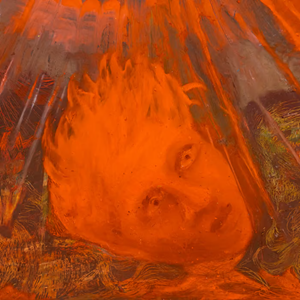
Originating from João Pessoa in Paraíba, the heart of northeastern Brazil, Papangu has long carved a niche as a heavy, intoxicating force positioned at the easternmost point of the Americas. Following their acclaimed debut “Holoceno” (2021) and the subsequent “Lampião Rei” (2024), the quartet has solidified their reputation among the “prog wunderkinds” of Brazil. While their previous works began tilting toward Jazz and Brazilian rhythms, their fourth studio album, Celestial, represents a doubling down on these elements without sacrificing technical rigor. This is a record defined by exceptional instrumental command and intelligent composition, anchored by an uncompromising approach to production: the band strictly rejected digital shortcuts and AI tools, opting for a purely organic workflow. Recorded almost entirely live in the studio over just nine days (September 2–10, 2025) at Berlin’s Big Snuff Studio, “Celestial” was captured on 2″ RTM 911 magnetic tape, mixed by renowned Berlin producer Richard Behrens (Elder, Kadavar), and mastered in an all-analog AAA process by Sidney Claire Meyer at Emil Berliner Studios. The instrumentation is a testament to vintage warmth, featuring extensive use of period-correct gear: Hammond organs, Fender Rhodes Junos 106s, Minimoogs, Moog Matriarchs, and DX7s. It was these precise analog tones that caught our eye previously for inclusion in our PRJ Compilation (here). Now, with “Celestial,” Papangu delivers a cohesive artistic statement that bridges the gap between Brazilian folkloric roots and European avant-prod complexity. The album opens with an energetic assault titled “Mau-Olhado” (Evil Eye). Pedro Francisco establishes the eclectic tone on electric guitar and 12-string acoustic, locked in a dense groove with percussion and wind instruments. The lyrics detail the struggle against superstition, describing the evil eye not merely as a curse, but as a violent gesture of light that disrupts peace, “flores secam, desencarna.” To combat this, the narrator performs a purification ritual, planting seven herbs and burying silver grains in the sertaneja soil. Musically, the track showcases the band’s modern Prog sensibility, granite-hard yet fluid, with distorted guitars intertwining with keyboards to create a solid, driving foundation. Francisco’s vocals fit seamlessly into the texture, bringing dynamism to the lyrical defense against dark forces. A melancholic cantiga about a place “depois do mar,” Colosso paints the image of a bronze colossus on a pier, eroded by salt and wind until it collapses “engolido capado e desmontado.” It serves as a metaphor for the fall of human ambition under the weight of fate. Structurally, the piece is an eclectic Jazz-prog vehicle featuring complex time signatures and Marco Mayer’s commanding bass work. As a pre-release single, it highlights the band’s compositional skill, merging furious accelerations with refined Latin Fusion. The track stands out for its technical rhythmic interplay; its length feels well-earned, leaving the listener wanting more of its intricate arrangements. In “Taxidermia,” the atmosphere darkens into surrealism, driven by Rodolfo Salgueiro’s vintage keys (Hammond, Rhodes, Juno). The lyrics offer a biting critique of hypocrisy and blind obedience, using “taxidermia,” old skin, burlap, copper, varnish—as a metaphor for a hollow shell (corpo fechado that is actually oco cerrado). While Salgueiro’s keyboard work provides classical Prog counterpoint to the heavy sections, Francisco’s vocals take on a rougher, more aggressive timbre, visceral and harsh, that suits the oppressive narrative. This track reveals the darker, heavier side of Papangu’s sound palette, successfully blending genre-bending intensity with atmospheric density. Focusing intensely on instrumental dynamics, “Bode Expiatório” spotlights the formidable rhythm section of Vitor Alves and Marco Mayer, complemented by Hector Ruslan’s jagged guitar riffs. The track marks the peak of Zeuhl influence and tension within the concept, the anxiety is palpable. The arrangement is enriched by flute passages and electronic effects, navigating continuous time changes with ease. It acts as a bridge between the Prog past and present, emphasizing the lineup’s high level of technical preparation in a dynamic mix of Jazz, Fusion, and Prog. The title-track serves as an emotional pivot point, a transition piece dripping with ethereal keys that recall late-’70s MPB (Música Popular Brasileira) and Psychedelic Fusion. The keys dominate the soundscape against a technical rhythm section and shifting meters, culminating in a poignant piano outro. It provides the necessary respite between the album’s heavier moments, grounding the avant-garde explorations in melody. As one of the band’s most beloved tracks due to its chameleonic nature, “Fechamento de Corpo” is a monumental piece exploring the ritual of bodily closure, sealing oneself against evil “eu vou me fechar vou me costurar.” The track begins with an hypnotic crescendo where instruments and ethereal vocals intertwine. This evolving theme eventually fractures into shattering Heavy climaxes, where Francisco’s flute and bells dance over Salgueiro’s Moog Matriarch and Minimoog experiments. The result is a visceral soundscape reminiscent of ritualistic intensity, featuring a killer bassline and penetrating vocals. The guitar and synth solos pierce the oppressive texture, offering perfect technical flourishes that propel the piece forward. “Calado (de Olho),” is another monumental Jazz-Rock/Avant-prog track built on dialogue between electric guitars and Hammond organ. The track infuses Brazilian rhythms from every groove, with vocals alternating between incisive delivery and traditional Brazilian phrasing. The lyrics warn of vigilance “faz tempo que eu tô calado, de olho na forma que te portas” and reflect on destiny and the present moment. The song shifts in its second half toward experimental territory, layering electronic effects over frenetic rhythms, a track that proved so fitting for our PRJ Compilation, it deserved to be heard again here. The atmosphere turns tribal and ominous in this invocation to “Iamanakaru,” an entity described as a flower wearing the night’s veil, associated with fire, pain, and the sickle. The rhythm section is elaborate and accelerated, blending Jazz Fusion with darker folk traits. Large portions of traditional percussion (caxixi, triangle, shaker) fight against grinding analog synths, creating a ritualistic texture that prevents the “sun from rising,” a sonic landscape of exposed thorns and sacrificial tension. The lyrical and musical climax of the album, “Afirmação” is a warm, triumphant melody that unites Brazilian ciranda sensitivity with masterfully orchestrated Symphonic Prog via Fender Rhodes and Moog arrangements. It resolves the album’s concept: moving past fear to self-affirmation. The lyrics celebrate the lush flora of Northeast Brazil, the umburana, cerejeira, and cumaru. Drinking the sap of the umburana becomes a toast to overflowing life. Here, Papangu revitalizes classic 70s Brazilian Prog with modern melodic incisiveness, offering a vocal style that echoes the golden era while remaining entirely fresh. A delicate instrumental farewell, the closer “Outro” leaves the listener in a state of cosmic reflection. Blending Jazz and Avant-prog elements, it concludes the intense journey without over-explanation, allowing the resonance of “Celestial” to linger. “Celestial” is a psychological and spiritual odyssey. It begins in the anxiety of superstition and paranoia-fear of the evil eye and the need for protective barriers, and evolves into a mature celebration of self-affirmation and connection to the earth. In an era dominated by digital standardization, Papangu’s choice to record live on magnetic tape (RTM 911) and master via AAA at Emil Berliner Studios is a heroic artistic stance. The warmth of the analog medium gives every track spatial dynamics where instruments genuinely breathe; the sound is not merely “vintage,” but organic and palpable. Papangu confirms their status as the generational mavericks of modern Experimental Rock. “Celestial” is an uncompromising masterpiece, a multicolored weave connecting Brazilian Folkloric roots with European Avant-Prog sophistication. It is a mandatory listen for anyone tracking the evolution of Progressive Rock in 2026.
Tracklist
01. Mau-Olhado (03:03)
02. Colosso (06:35)
03. Taxidermia (06:18)
04. Bode Expiatório (05:20)
05. Celeste (03:56)
06. Fechamento de Corpo (07:13)
07. Calado (de Olho) (07:12)
08. Iamanakaru (03:36)
09. Afirmação (05:08)
10. Outro (01:42)
Lineup
Pedro Francisco / Electric Guitar, 12-string Acoustic Guitar, Triangle, Harmonica, Flute, Floor Tom, Rubber Chicken, Fender Rhodes, Moog Matriarch, Bells, Caxixi, Voice
Marco Mayer / Electric Bass, Voice
Hector Ruslan / Electric Guitar, Voice
Rodolfo Salgueiro / Hammond Organ, Ppiano, Fender Rhodes, Juno 106, Minimoog, Moog Matriarch, DX7, Shaker, jamblock, Voice
Vitor Alves / Drums, Triangle, Shaker