

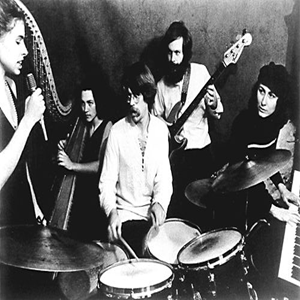
The history of 1970s American Progressive Rock is frequently framed through the lens of Symphonic giants and Jazz-Fusion virtuosic outfits. Yet beneath the commercial surface lay a far more enigmatic, Avant-Garde undercurrent where Classical discipline met Electric Experimentation. Among the most brilliant, defying categorization, was Musica Orbis—an American Electric Chamber Music ensemble based in Philadelphia, active between 1972 and 1979.
Combining acoustic fragility with electrifying rock structures, Musica Orbis crafted a soundscape that bridged sacred acoustics, folk intimacy, and progressive complexity. Their story is not merely one of obscure vinyl pressing, but an extraordinary saga of independent DIY ethos, multimedia performance art, and nomadic touring across a changing American landscape.
— Genesis at Swarthmore College: From Septet to Core Quintet (1972–1973) —
The genesis of Musica Orbis took root in the late spring of 1972 on the campus of Swarthmore College, founded by singer and songwriter Kitty Brazelton alongside cellist and percussionist Tom Stephenson. Seeking to fuse acoustic intimacy with electric dynamism, the founding pair quickly recruited keyboardist Susan Gelletly and harpist Caroline “Caille” Colburn. The lineup was further rounded out by percussionist David Clark, guitarist James J. Kelly, and saxophonist/bassist William Pastuszek Jr.
Before their official concert debut, the fledgling septet performed at Clothier Hall in March 1973, opening for the Jazz-Rock outfit Good God and Hard-Rock icons Blue Öyster Cult. On April 15, 1973, Musica Orbis delivered their formal debut concert at Bond Hall on the Swarthmore campus.
By the autumn of 1973, the ensemble streamlined its structure from a septet to a tight, highly cohesive quintet consisting of Brazelton, Clark, Colburn, Gelletly, and Stephenson. This reduction in personnel did not shrink their sonic footprint; rather, it crystallized their signature identity as an “Electric Chamber music quintet.”
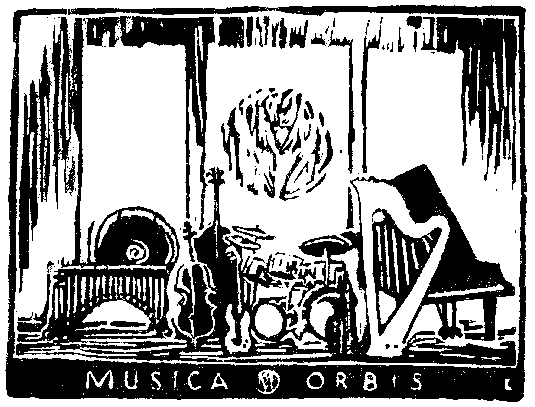
— The Philadelphia Underground & Sacred Arenas (1974–1976) —
Throughout the winter of 1974 and 1975, Musica Orbis expanded their artistic reach into multimedia performance art, accompanying the Group Motion Multimedia Dance Theater. They established themselves across prestigious Philadelphia venues, including the Wilma Project, the Painted Bride Art Center, The Bijou, and the Annenberg Center on the University of Pennsylvania campus. Historical archives from the Philadelphia Athenaeum even capture a memorable marquee at the Bandbox Theatre announcing: “CONCERT BY MUSICA ORBIS / NEW YEARS DAY FIVE PM”. It was during this fruitful era in 1975 that Kitty Brazelton composed the standout piece “William.”
On June 13, 1976, Musica Orbis organized an iconic dawn concert along the banks of the Delaware River. Shortly thereafter, the group ventured into the competitive music circuits of New York and Boston, earning praise in major publications such as Billboard, The New York Times, and the Boston Phoenix.
In April 1976, Cambridge’s alternative weekly The Real Paper designated Musica Orbis as “Band of the Month.” On May 1, 1976, the band performed a legendary, sold-out concert at the Sanders Theater in Harvard Square, hosted by Mike Baron of the Harvard Mather House Music Society. Their performance venues reflected an extraordinary stylistic versatility: they played in sacred spaces like the Chapel at St. Bartholomew’s Episcopal Church in New York City, Avant-Garde spaces like the off-off-Broadway Cubiculo Theatre, and even the legendary Punk/New-Wave shrine CBGB.
— Sonic Anatomy: The Multi-Instrumental Web —
What set Musica Orbis apart from virtually all their contemporaries was an extraordinary, lavish instrumentation. Rather than relying solely on the standard Rock instrumentation of guitars, bass, and drums, the quintet operated as a self-contained orchestral unit.
Their sonic tapestry incorporated:
Vocals & Polyphony: Lead vocal work by Kitty Brazelton, layered with intricate group harmonies.
Strings & Harp Systems: Classical harp, Irish knee harp, cello, acoustic bass, and electric bass.
Keyboards & Synthesizers: Piano, Fender Rhodes electric piano, organ, traditional pump organ, and analog synthesizers.
Percussion & Mallets: Concert marimba, vibraphone, tubular bells, drums, and an array of hand percussion.
Woodwinds: Flute and wooden recorders.
This diverse setup enabled Musica Orbis to shift effortlessly between delicate baroque textures, resonant modal folk, ambient chamber spaces, and soaring Electric Progressive climaxes.
— Discographical Deep Dive: To the Listeners (1977) & Rare Singles —
The Masterpiece LP: “To the Listeners” (1977)
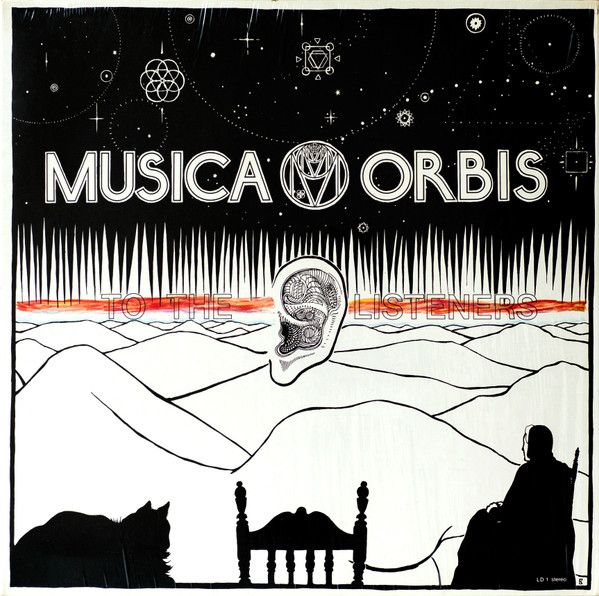
In 1977, Musica Orbis self-released their debut full-length album, “To the Listeners,” establishing their own independent imprint, Longdivity Records.
The Original Longdivity Private Pressing: The original self-released LP featured a custom fold-out gatefold jacket. Copies purchased directly from the band came with an individually signed certificate, creating a personal bond between the musicians and their audience.
The Rounder Records Distribution: Through sheer determination and word-of-mouth acclaim, the band sold an astounding 5,000 copies of the album completely independently. This triumph attracted Folk/Roots giant Rounder Records, who took over national distribution. The Rounder pressings simplified the packaging, replacing the fold-out gatefold with a standard single sleeve featuring uncolored black-and-white outer artwork.
The 7″ Single: “Red Winds” / “Happy” (1977)
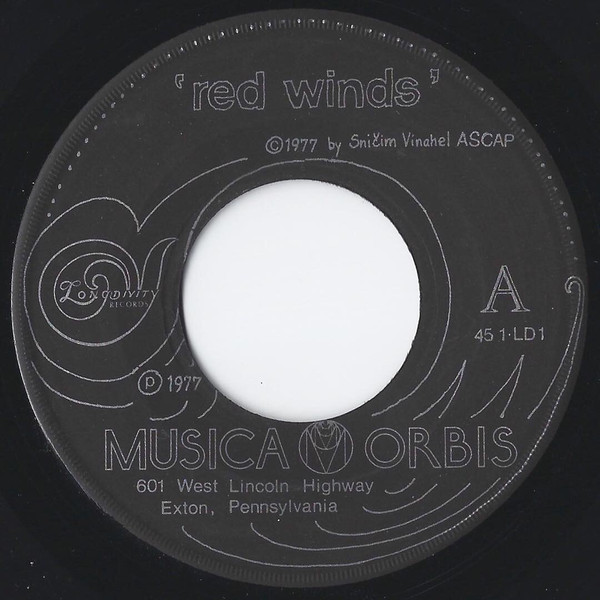
In tandem with the LP, Musica Orbis issued a rare 7″ vinyl single on Longdivity Records (catalog ID: LD1) containing the tracks “Red Winds” and “Happy.” Today, this 45 RPM release stands as one of the most elusive artifacts for collectors of 1970s American Progressive music.
— The Nomadic Caravan, Lineup Shifts, and Farewell (1977–1979) —
Following the release of “To the Listeners,” Musica Orbis embarked on four extensive national tours throughout 1977 and 1978, performing in over 25 states and making numerous appearances on television and radio broadcasts.
The band embraced a fully nomadic DIY life, traveling in a caravan that included a mobile home, custom sound and lighting rigs, and a dedicated road manager/cook. During this period, original keyboardist Susan Gelletly departed in 1977. She was replaced by pianist Bob Loiselle, and the ensemble subsequently expanded into a sextet with the addition of guitarist Bill Mauchly.
After seven years of intense creativity, live performances, and independent output, Musica Orbis announced their farewell concerts and officially disbanded in 1979.
— The Lasting Legacy of Musica Orbis —
Musica Orbis represents a triumphant moment in 1970s American music history. Uncompromising in artistic vision, they bridged the gap between classical concert halls and underground Rock clubs, proving that self-sufficiency and high musical complexity could thrive outside major record label systems. For collectors, archivists, and Progressive Rock enthusiasts, “To the Listeners” remains a shining beacon of Chamber Rock innovation.