

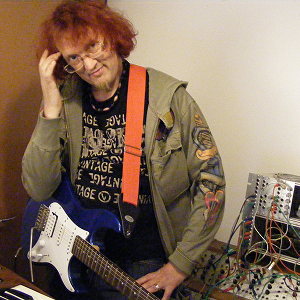
For over two decades, The Tangent have stood as one of modern Progressive Rock’s most articulate, unpredictable, and uncompromising voices. Led by keyboardist, vocalist, and composer Andy Tillison, the band has consistently bridged Symphonic Rock complexity, Canterbury-infused Jazz, Electronic Experimentation, and sharp societal commentary. With their new double album, “WAS,” a massive 100-minute work released via White Knight Records,the group delivers a deep, multifaceted exploration of nostalgia, memory, and musical fusion. We sat down with Andy Tillison to discuss the concepts behind “WAS,” the legacy of Keith Emerson, line-up chemistry, and the evolution of the band.
Welcome to Progressive Rock Journal, Andy. The new album ”WAS“ is described as a distillation of everything The Tangent stands for, subtitled or centered around the theme of ‘A Nostalgia.’ What prompted you to dissect nostalgia at this specific point in time, and why was it vital for you not to view the past through “rose-tinted spectacles“?
Well hello and thankyou for taking the time to talk to me and for the very nice introduction which shows you have been listening!!! Yes.. “A Nostalgia” – that’s my descriptor for the album and there’s a certain amount of care and thought gone into the two words there. How they translate to everyone else, I’m not sure, but for me introducing the Indefinite article “A” indicates that fact that not all nostalgic feelings are the same and we are capable of building our own tailor made nostlgias in which to live. We can get nostalgic for certain songs from the past, of course we can. That’s something that everyone does or will do at some point in the future. If we are interested enough in music we may go further and become nostalgic for the mechanics of how that music was made, the instruments used, the method of recording – the medium it was released on, all these are additions to the image of the past that we have. In recent years I find more and more people of my own age subscribing to a kind of generalised musical nostalgia that goes something like this… “Back in the 70s it was all about talent, they didn’t need autotune, they didn’t need samplers and computers” You can find someone saying something like this in the first few comments on every single Youtube video of a late 20th century band. And this always reminds me of my Mum one generation earlier. Back in the 1960s she’d be saying that the great singers SHE loved “didn’t need microphones”, amplifiers, public address systems. It was all raw talent and voice projection…. And music is only a little chunk of the nostalgia. I’ll see people watching Fred Dibnah demolish a chimney who say “back then there was no stupid Health & Safety rubbish” and it makes me wonder why anyone now would WANT to see people doing demolition jobs without proper protective equipment. This is the rose tinted lens stuff I wanted to avoid. Giving too much credit to a world where Homosexuality may have been freshly legal but was as taboo as ever, where Women’s rights were about as well established as picking up a tin of beans a day and saying “Beanz Meanz Heinz”, where ashtrays were available in Hospital waiting rooms and where racist jokes and similarly racist entire sitcoms were on Saturday evening TV. And Yes – I loved the music of the time, my youth – but that music was as reliant on the technologies of the day as much as it is now. Just different technologies. If it hadn’t been, Yes would have recorded Tales in around 90 minutes and been in the pub by 5. In this album I certainly wanted to CELEBRATE the incredible experiences of music and so much more that I had had… but I didn’t want to become fixated on a “perfect time”. It was not perfect. Not by a long shot.
Disc 1 navigates contrasting memories, moving from the warmth of listening to 1970s vinyl LPs to the harsh historical realities of the Vietnam and Nigeria conflicts happening during that same era. Musically and lyrically, how do you balance personal halcyon recollections with those heavier global realities?
It’s really a case of just looking outside the box. To a load of people, myself included – 1972 was all about the latest and most exciting things. This was the space age. We had cool “hi fi”. We had “Close To the Edge” and “Dark Side of The Moon”. We’d seen 2001 A Space Odyssey. Like todays folks are looking forward to Grand Theft Auto 6 – a complete world where they can break the law, kill people, rip everything to shreds and experience total anarchy, we had our escapes from reality. And yes, there were people being napalmed In Vietnam, there was starvation caused by war in Africa. And the records we played, fell in love with were a soft blanket of possibility – an optimism which many of us were happy to accept, and some used it to just filter the outside world away. A sort of noble cause, a philosophy to adhere to, where the “Dawn of a light lying between the silent and sold sources” was a signpost to a world that could be better, more accepting and less hostile. We were never sure what the words meant, but that was part of the charm. I have always had to live with the reality and the dream together in my head. The punks lived mostly with the reality, the Proggers lived mostly with the dream. The ones who, like me, fell on the exact cusp of the two movements always had a lot to process. I’m still processing it now. I want the dream. But the reality is always knocking on the window.
You also explore the concept of “applied nostalgia” through popular media, referencing WWII narratives and sci-fi tropes like a multi-cultural crew on a five-year starship voyage. What fascinates you about the way shared media constructs our collective memory of history?
Well… it fascinates and horrifies simultaneously. The song “Was Not” is all about this phenomenon. In my lifetime I have been presented with many alternative views of the future, and just as many of the past. But to be boring and pragmatic as I often am, I have ZERO memories at all of the Second World War that are my own. I have no memories of the future because it has not happened yet. And like many people my own age I have grown up with visual recreations of alternative pasts and futures – and so many of these are wildly different it becomes almost possible to adopt the storyline of the one that suits you the best. Films and TV shows, games and books about WW2 can take so many angles…from the ones made DURING the war which were laced with propaganda, the ones that were made shortly afterwards (Dambusters style) which were all about the heroism, the rise to serving one’s country no matter how appalling the consequences really were. Then there were the blockbuster fictions of things that didn’t ever happen “Where Eagles Dare”, “The Eagle Has Landed”, “Guns of Navarone” – ripping yarns set in the background of global conflict. Yes… these were hugely popular and they shaped a whole generation’s view of the world, but their resemblance to reality was on a par with “The Hobbit” We were also given, later on, much harder-to-bear WW2 films. “Private Ryan” never became Christmas Day TV entertainment like “The Great Escape”. Nor “Schindler’s List”. And like with music – people choose their era. And out there in the world of right wing politics – people choose the iconography of Spitfires, The Little Boats, the “Help everyone” attitude in The Blitz and remember a world where Britain was truly “Great” and the plucky little island that stood up for freedom against fascism and racial hatred. Now with a little sleight of hand, those Farages, Trumps and Tommo -Tommy people can shift the iconography of a war AGAINST fascism to represent a call to arms to promote Fascism using a quaint nostalgia as a facade. And it’s working. As for the “Future” scenarios – well it’s quite a similar leap. What I was FIRST presented with was the image of multi racial/multi species crews of spaceships. The reality which came just a couple of years later were military test pilots all male, all white, all American. Reality can be so boring, and so fricking tiring.
Disc 1 is structured around three major pieces: “Was,””Follow the River,” and “Was Not.” How do these three compositions interact conceptually and musically to lay the groundwork for the rest of the release?
The two pieces Was and Was Not focus on the two different perceptions of reality I have described above.. “Was” being a sort of quick flick trough my own life, upbringing, understanding of the world and my releationship with music. “Was Not” deals with the bolted on imagery from the TV/Movies that has ALSO shaped who I am even though none of it is experienced by me. The third song “Follow The River” takes as its subject a real life thing, yes, a River, that has been flowing through Yorkshire since before Humans walked on the surface of the planet. It is not debatable, never required planning permission, it’s never had a day off and it will be there after we are all gone. Like the “North Star” on the previous album, the river represents constancy, fact, and purity. . Of course, these songs take the more familar path of stories that have words… you get to hear exactly what I wanted to say. I often think of my songs lyrics as being the safety net – the explanation, the user manual of the music I write.
Disc 2 shifts gears completely into an instrumental suite titled La Suite Ce qu’était, dispensing with lyrics almost entirely. What made you decide to isolate the lyrical storytelling to Disc 1 and dedicate the second disc to a continuous instrumental narrative?
More and more over recent years I’ve enjoyed removing the lyrical devices from the music and attempt to tell the stories with just the music. This of course is how the great classical composers would approach the task as a norm. For me, it’s a bit new, and thiose guys were way way ahead of me. But I’ve wanted to get started for a long time now. We released our First instrumental piece “Doctor Livingstone I Presume” on the album “The Slow Rust Of Forgotten Machinery” – a 12 minute long affair, and we followed on from it with “The Melting Andalusian Skies” on the album “Proxy”. We did our first 20 minute instrumental epic “The GPS Vultures” on “Songs From The Hard Shoulder” and these three pieces have become some of my favourite pieces of the band’s work. So what I did here was try to tell the story twice. Once with lyrics (CD 1) and once without lyrics (CD 2) 2 separate sets of compositions that share the same basic concept!
You’ve mentioned Keith Emerson’s “Five Bridges” suite with The Nice as a primary catalyst for this composition. In what ways did Emerson’s pioneering work inspire your approach to fusing orchestra, heavy brass arrangements, Prog, Jazz, Funk, and performance DJ techniques?
The interesting period in the late 60s, early 70s when Progressive Rock was busy forming itself and finding its boundaries was always something that fascinated me. Although, in the main, prog rock became more about small format 4-6 piece bands aided by music technology, there were these large scale hybrids being tried as well. The “Days Of Future Passed”, the “Concerto for Group and Orchestra”, the “Five Bridges Suite”, “Concerto Grosso”. They were in general unweildy, expensive and highly unpopular with the musical journalists of the times. Within a couple of years Mike Oldfield had managed to make one completely alone, he WAS the orchestra but he used a different palette of instruments and steered a different path. Where Deep Purple after their big Albert Hall performance steered off into a Hard Rock niche, then Emerson formed a new band to continue his explorations of classical music as a 3 piece prog power trio making his most successful subsequent compositions with a Hammond Organ, a Piano and a Monophonic Syntthesiser. The few of these orchestral hybrids that remained are almost musical orphans, unloved by critics and fans alike, curiosities. Everyone seems to have a copy of one or two… not many talk about them. I personally love the Five Bridges Suite by Keith Emerson and The Nice. More than the others. Because this whole album… even the classical sections with no rock band at all sound unmistakably like the composer. Emerson. Where Purple’s attempt is kind of “Classical music”. “Rock Music”, “Back To Classical” etc etc… the orchestral sections do not sound like or remotely relate to the rock band or to anything particularly “Jon Lord-ian”. It’s two totally different ensembles sat on a stage taking it in turns to play. With “Five Bridges” it’s Emerson from the first notes to the last. I think that’s why this one worked for me. As this musical cul de sac has become more and more neglected, the more I wanted to do something that echoed it. The Tangent would never have been able to afford an orchestra – but musical technology has come so far as to now put the possibilities into our hands. I seized the opportunity… as a way of telling the story of my/our lifetimes through the immense tapestry of music through which we have lived. And of course there are nearly 60 years of musical developments to be included that did not even exist at the time of 5 Bridges. And, as if to re-enforce that claim, there are now 7 bridges across the River Tyne Quayside. Not 5. Emerson saw these bridges as avenues for uniting music from two sides of a story – a dividing line which he took great pleasure in crossing. I have enjoyed retracing his footsteps.
The movements on Disc 2 bear French titles, such as “L’Aperitif,””Steak de chevreuil et Le Fermier,” “Danse,” and “La Route côtière.” What is the atmospheric or narrative idea behind this French suite structure?
Well, I’ve always been a fan of the French Suite. Notably Debussy who was into his prog rock style subsections many years before “Total Mass Retain”, “Sure as Eggs Is Eggs (Aching Men’s Feet)” or even “Fitter Stoke has a Bath” Debussy would have “De l’aube à midi sur la mer” (From Dawn to Noon on the Sea) as part of his “La Mer” suite. I love Debussy. I love the French language and I love French culture. So writing this with French titles gave me a lot of pleasure. I could also play little games with the titles. Some of them are jokes which have to be translated into English before they become apparent. I enjoy this kind of wankery.
Combining 20th-century classical orchestrations and brass with modern electronic DJ methods and progressive rock is a complex balance. What was your arranging and studio workflow like when weaving these diverse eras and genres into a cohesive whole?
Well – I think your question anticipates how hard it was, and yes… it was really difficult. I am not a well educated musician, I do not understand a lot of musical theory, I can’t read music and I don’t know the names of all the chords, modes and all that stuff. For me I just hear it in my head and then I try to make it happen in the real world. Takes a long time. But I have a whole load of advantages working for me as well. I am never restricted by shit like “You can’t do that” – or “You can’t have that note there”. I also never get tired of music, I’m always enthusiastic about it, I never give up and I will always give everything I do my best. Yes, it’s hard, yes I wish I understood more about the science of it all. But, for all the weaknesses which can be criticised by idiotic orchestra pit musical snobs who might for example say that I am a “mediocre” composer, I am damned good at this. And they can f**k right off!
The lineup on “WAS” brings together yourself alongside Luke Machin (guitars), John Jowitt (bass), Theo Travis (wind instruments), Steve Roberts (drums/percussion/gongs), and Rob Groucutt (keyboards). How did the group dynamic shape the arrangements for a double album spanning over 100 minutes of music? With a total running time of 100:46 presented in a 2xCD digifile package, how do you approach pacing and structural tension to keep the listener fully immersed across two entire discs?
Let me go straight to the last part of that question, of course “keeping interest” is vital nowadays particularly with all the attention grabbing stuff that’s going on on a small screen about 18 inches from any potential listener’s head. Writing long form Prog Rock in 2026 is not a great way to build your profile. So – the best thing for me is to to STOP building the profile, and focus on the music. And have faith that people on this planet still exist – who want to hear something like this. Music that is hard work for them to enjoy but that is worth the hard work. In order to make this happen I consider that changing a chord, a lyric, a melody anywhere in the piece… requires a full listen to the WHOLE ALBUM to see how that tiny change impacts the whole experience. So yeah. Literally. Change a bass drum pattern on one bar of one song. Really. That DOES affect the whole piece and the whole album. Anyone who thinks it won’t matter is fooling themself. You need to know how the music felt BEFORE the change and how it seems after the change. The flow is all important. And the flow can start 35 minutes before the change and continue 36 minutes after it. I have a group of musicians who bring “themselves” to the table. While many bands are all the work of one guy and some session musicians – this one is not. All the contributors play as themselves- bring their own parts to the music and create the final product in a way that I could not have foreseen. Luke did the sound mix and production for the whole of the vocal album, as well as devising all the guitar parts for the whole record. He came up with fantastic backing vocals and the record without him would not be the same. Which applies to everyone in the group. John Jowitt took over from Jonas Reingold on this album. he did not simply replay Jonas’ parts but created new ones and that had to trickle down into the rest of the piece and the rest of the instruments. That’s how The Tangent has always worked and we’ve had producers who wanted to replace our drummer with samples, hire in “professional” backing singers and hire famous people. They get sacked pretty quick because that’s not US. Those same producers will now probably be doing everything with AI and they’re welcome to it. The drums were recorded in my partner Sally’s wardrobe room. They are real, they are inspired and they are exactly what I wanted. I’ve hired expensive name drummers before, and not got the results I wanted. And Steve’s snare drum sound is a thing of beauty and the guy who wanted to replace it with a one shot West Coast USA thud is now working for someone else and presumably trying to f**k their record up too.
Released via White Knight Records, “WAS” features a rich and layered production. As the main composer and lyricist, how do you determine when a complex, multi-movement track has reached its definitive final form?
Truth is…. they are never finished. There’s just a deadline. They could always be better in our heads. Always something we wish we’d done another way. Always a lyric I wish I’d done differently. There comes a point during the tweaking when Luke and I know “we’re just about there” The little modifications we make become smaller and smaller so that a month later I can’t even hear the differences between Mix 17a and Mix 23. Somewhere in that frustrating time, we know. Both of us wish that it was more “obvious” when it’s done.Both of us wish there was a definitive Green light that would somehow declare it “perfect”. But maybe that’s exactly the oppositte of what we need! Because who’s to say what’s right?
Since this is our first feature on Progressive Rock Journal, looking back across the band’s catalog since the early 2000s, how do you view the stylistic evolution of The Tangent from the debut to “WAS”?
Looking back over The Tangent is a weird thing, for a lot of people. We started work on our Debut album in 2002 – 24 years ago. We have made 14 studio albums since then. To people my age, 2002 is recent. But that’s just us being old. Our 14 albums span those 24 years in exactly the same way as Pink Floyd going from Meddle as far as The Division Bell. Which of course SEEMS like a longer story. But it’s not. Pink Floyd made 15 studio albums. We’re on 14 now and the equaliser is in the oven already and is guaranteed to be better than “The Endless River”. Whether we have brought as much to the table as Pink Floyd is an entirely different question to which I can only answer “no – we most certainly have not”. The Tangent’s Music has always worn its influences on its sleeve. We have constantly referenced, catalogued the music around us and a lot of that cataloguing has been about progressive Rock Music – a genre I feel has been unfairly represented since its heyday, and a genre which always deserved more friendly critique. While The Tangent have drawn on many influences from that heyday, we have built OUR fusion of music to create our own band, our own sound, our own collage and our own vision of what electric music can do. We have been surrounded by music the likes of which Gilmour, Waters, Squire, Gabriel, Latimer etc could never have foreseen in that heyday. They made their music with the influences of what was around them then. We have made ours with the influences surrounding us… many of which did not exist back then. But we have NEVER pretended that that heyday did NOT exist, it’s part of what makes us who we are.We have always embraced Progressive Rock Music, never distanced ourselves from it and never mocked it as so many are wont to do.
Your music has always seamlessly blended Symphonic Prog and Canterbury Jazz-Rock with Electronic textures and direct social commentary. Was this eclectic sound a deliberate manifesto from day one, or did it develop organically over time?
In 1981 I wanted to be a pop star. I’d been brought up by the great prog bands and challenged by the amazing punk rockers. I’d listened to the works of Bach, Beethoven, Strawinsky, Debussy, Zappa, Oldfield, Floyd, The Damned, Talking Heads, XTC, Van Der Graaf and I loved the stuff. But something was getting LOST in the early 80s and more and more I realised that what was being lost was the reason for doing all this stuff. As Duran Duran sailed on their boat into our screens, as Madonna became the Vogue, as Spandau and others like them put all their danger into their haircuts – I met Chumbawamba. And through them, Crass, Flux and others who had huge musical ambition but also a real life and earnest political message to share with the world, one that fitted in with so many of the earlier artists I had enjoyed. It seemd to me that as Genesis and Yes entered the world of empty headed Stadium Rock and the New Romantics were keen to show us another interesting collar style, Chumbawamba were letting us know how much the Rock and Roll dream had been hi-jacked. And I was on board from the off. I followed that band for many years and still respect what they did to this day. Remembered primarily for a single hit record, their decades long career was so much more. To me they were the logical follow on from the peace movements that had brought us Woodstock. A CSNY, a Henry Cow for a decade or so later on. More edgy perhaps, but they still had the spark of Rock and Roll’s political invective. And I’d lost mine. This is when I formed the band “Gold Frankincense and Disk Drive” in 1987. A band that was centred around a political agit pop core yet with Prog Rock influences and punk sensibilities. After this Parallel or 90 Degrees became a similarly prioritised band with more Prog than GFDD and The Tangent was an accident that was originally a one off idea, but ended up replacing everything else in my musical life. But I wasn’t going to drop the politics. That’s one of the reasons I do this. If people don;t like it, there’s always someone else to listen to.
Is there a specific moment, recording session, or behind-the-scenes anecdote from the band’s history that you feel perfectly captures the creative ethos of The Tangent?
Within a few years of each other an assortment of bastards with guns/bombs shot up and killed people at gigs at The Manchester Evening News Arena, The Bataclan in Paris and at a music festival in Las Vegas. The third of these happened just when we were on tour. We arrived at our gig (Summer’s End festival in the UK) and I wrote a song about this AFTER we’d done our soundcheck. None of us had ever heard it, including me. We just knew what the lyrics were going to be, and what key it was going to be in. And we played the song to our audience and made the middle 8 of the song into 30 seconds of silence for the victims. The world literally stopped turning. We could hear a clanky blade in a distant air conditioning unit. And then the band came in. It was the best of us that night. It meant something. “Meaning something” for however long it lasts is something that is a cherishable commodity for any artist.
Translating complex, heavily orchestrated studio works like “WAS” to the stage is always a formidable task. Are there plans to perform material from “WAS” live, and how do you adapt multi-keyboard and brass-heavy compositions for concert settings?
We’ve already play parts of the song “Was” live We have a six piece band featuring 2 keyboards players and a Wind player and there’s not a lot we can’t do on stage. We won;t be playing a whole album or anything – we usually have to miss out at least 7 entire albums at any one live show!!!
Having been an active force in progressive music for decades, how do you view today’s prog scene compared to when you started, particularly regarding physical media, independent labels like White Knight, and audience engagement?
There WAS a time when I thought that my title for our first album “The Music That Died Alone” was a bit pessimistic. In fact at the time Transatlantic, The Flower Kings, Spocks Beard, Magenta, Credo, Discipline, Jump, IQ, Jadis were giving us the ride of our lives. We’d never had it so good. There were festivals all over the world, The Tangent HEADLINED Rosfest for christs sakes!! The records were being excitedly discussed on the internet and for a while it seemed we were building something new, something great, a scene with a “Classic Rock Society” and record companies, venues and ealy Internet radio stations all onside taking part in the cause. As the scene burgeoned it began to be noticed by the old hacks from the first gen. And they just came and fricking sat on us. When Van Der Graaf Generator reformed in 2005, there was a huge tipping point and year by year we watched to old bands come back and play us some tour where they played a classic album, and they just beat us to a pulp. We had no chance against them. Steve Wison sold his soul to become the remixer general of prog rock classics, and his (very unsatisfactory) remixes of Yes albums were outselling the new bands NEW material hundreds of time over. The Genesis “When In Rome” concert made more money from one gig than the entire combined earnings of all the new Progressive Bands since their inception. People became more and more interested in finding their own bonkers way back to the ultimate version of “Fragile” than they were in discovering new music. I have a friend whose colossal record collection includes no less than 7 bought and paid for editions of Close to the Edge, and also has an entire collection of Flower Kings albums downloaded from some pirate site or other with a faded laser print copy of the covers stuffed into a jewel case. He says “they’re not as good”. Bollocks. The internet which was once our friend is now against us with Youtuber after Youtuber going for reviews and features about the classic period and almost entirely forgetting the newer artists. Because THEY get more money/followers/likes for doing that – it’s creating a slow death spiral for anyone who wants to create new music. because no-one is bothered any more. It’s over. Really. Totally fucked up. But The Tangent and other bands who still believe in this genre as ripe for expansion, modernization will still be here. Labels like White Knight, GEP, Insideout still champion the cause, as do publications and websites like yours here at Progressive Rock Journal on the web, and Prog Magazine on the high streeet. If only we could ever get away from the endlessly repeating cycle of video reviews like “Love Beach – Is it really as bad as they say?”. Because it was nearly 50 years ago. And it was as bad as they say. And it’s time to move on.
The Tangent has never shied away from addressing real-world political and social issues. Do you feel Progressive Rock has a responsibility to engage with contemporary reality rather than leaning purely into fantasy or retro-nostalgia?
No.. I don’t think its the responsibility of any artist to deliver anything more than what they wish to say. After all, the almost entirely instrumental work of “National Health” has nothing to say about politics, oppression, prejudice or war. That’s not something that’s missing from it. It’s just not part of the ingredients. National Health is PURE music. It exists for the simple beauty of its own existence. At the same time, if Dave Stewart ever wanted to write a politically motivated song as inspiring, galling and as ON THE MONEY as his genius “Sing Jersusalem” I would be all over it like a rash as long as it didn;t have that dreadful drum sound on it again.. I LIKE fantasy, I like Sci Fi, I like nostalgia, I like humour in music. I actually use all of them in mine. I have no objections to people who steer away from politics, and no objections to the people who do not steer away. There’s a lot of stuff that I really hate in this world, homophobia, racism, transphobia, bigotry, fascism, corruption and I look forward to a day when I don;t have to sing songs about these things any longer.
For readers of Progressive Rock Journal diving into “WAS” for the first time, what core feeling or idea do you hope they take away from this 100-minute journey?
I hope that some people will value and enjoy the invitation to spend those 100 minutes in communion with the long forgotten art of listening. It’s time to switch off the phone, the TV, the console and just let the music in. It’s not going to be easy work. A lot of us are out of practise and “The Lamb”, “The Wall” and the “Topographic Oceans” are a long time ago. This album will be every bit as hard as those classics were. But it WILL be ultimately as rewarding as any of them were. It was written by a person who understands what all this meant. Who is no longer a 21 year old at the beginning of a career. This album is about MY life, and as such has many many parallels with your life. It’s about everything. It’s about valuing a dream enough to make it true. We have done this. You are welcome to hate it, love it, skip it or embrace it.
With “WAS,” The Tangent have delivered one of the most ambitious and reflective works of their career, a 100-minute journey that honors musical history while refusing to stay trapped in the past. We extend our gratitude to Andy Tillison for sharing his insights with Progressive Rock Journal. Be sure to check out our full track-by-track review of “WAS” in this issue, and grab your copy of the 2xCD edition via White Knight Records.