

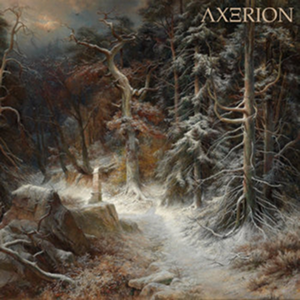
Multi-genre composer and solo project Axerion has officially released its third studio album, “III.” In an exclusive collaboration between the artist and Progressive Rock Journal, the complete record is now available for full streaming alongside an exclusive interview exploring the composition process and thematic ideas behind the release.
Following the release of “The Void is Upon Us” (November 2024) and the self-titled “Axerion” (January 2026), “III” represents the next chapter in the project’s discography. The six-track record blends elements of Progressive Rock, Jazz Fusion, Ambient atmosphere, and Modern Classical structures. Written between November 2025 and October 2026, with recording sessions held in late summer 2026, the album was entirely composed, arranged, and produced by Axerion.
The material spans concise, atmospheric pieces such as “Sojourn” alongside extended arrangements like “Wind,” “Cycles,” and the 13-minute centerpiece “Tidal Currents.” Visual aesthetics are framed by Carl Friedrich Wilhelm Trautschold’s 1868 painting “Verschneiter Winterwald,” mirroring the quietude and winter landscapes that shaped the recording sessions.
Stream “III” in full via the official YouTube player below:
Exclusive Q&A with Axerion
“III“ represents a sophisticated synthesis of Progressive Rock, Jazz Fusion, Modern Classical, and Ambient soundscapes. Following your previous works “The Void is Upon Us“ and the self-titled “Axerion,” how does this third album refine your compositional language, and what overall narrative binds these diverse musical worlds together?
The album does refine the styles, but most of all combines them. You’ll hear influences of the previous ambient works through the slow-ish tempos and the amount of atmosphere created by the reverbs and such, the more sophisticated compositional ideas from “Axerion” being condensed into shorter songs, some of the minimalism of “The Void is Upon Us” shown through stuff like “Sojourn” and still the Jazziness of all the previous albums being shown ever-more-present. As for the narrative part, there isn’t really. The album doesn’t really have a story as such, maybe a sort of atmosphere but no real narrative. The individual songs might have a theme of sorts, like “Sojourn” possibly representing resting in a forest or something, as the word and the music might suggest. But for the most part, it’s just about the music really. I think they’re brought together by the atmosphere rather.
The writing of “III“ spanned nearly a full year from November 2025 to October 2026, followed by an intensive recording period in late summer 2026. How did this deliberate timeframe influence the structural balance between concise, evocative pieces like “Sojourn” and longer arrangements such as “Wind” and “Cycles”?
It did sort of span that long. I put it in the credits because it does, technically. Note that. The active writing period was more like July or August to October 5, 2026. Despite that, I must put it that way as one of the sections in “Tidal Currents” dates as far back as late November 2026 (hence the date). It’s similar to Frank Zappa’s way of taking material from years earlier and compiling it into an album. The recording of it, from August to October, was more deliberate. The first song I wrote was “Cycles”, partly inspired by the clean sections of a lot of Progressive Death Metal, with Cynic’s “Textures” and Beyond Creation’s “Binominal Structures” opening being the main ones. The timing didn’t necessarily influence the balance of things. I’ve always sort of designed the flow of my albums, to balance the timing between long pieces and shorter ones to keep the listener enticed. Though, the serene Autumn landscapes around the time certainly influenced pieces like “Sojourn” a bit.
For the artwork, you chose Carl Friedrich Wilhelm Trautschold’s 1868 painting ”Verschneiter Winterwald.” What drew you to this classic 19th-century winter forest landscape, and how does its atmospheric stillness mirror the sonic textures of tracks like “Wind”?
It doesn’t, kind of. I picked it for a different album initially. III went through three different stages of development, with the first one being this dark-ish, jazzy continuation of the sound of “Axerion” before it. I had seen the painting floating around the internet for quite some time, and the way the lighting and the shadows are, made me always drawn to it. “Axerion”, the previous album, also had some imagery and ideas of the 19th century Victorian era. I find it best represents “Sojourn”, in which you might be able to picture someone of this era, a traveler perhaps, finding some brief rest and comfort in the woods near the setting of the painting.
Pieces like “Modal Tune” and “Zarathustra” suggest both rigorous harmonic exploration and intriguing philosophical or literary reference points. Could you elaborate on the modal approaches and conceptual ideas that shaped these central tracks?
“Modal Tune” is actually named after what it is musically. It’s a pretty modal tune. I like those kinds of names, the sort of thing you might see on a Miles Davis inspired Jazz album from the 50s or 60s. Of course, this is Fusion. It’s really a series of continuous solos performed by me, over one singular vamp that consists of major 9th and 11th chords on the rhodes. Zarathustra, on the other hand, actually doesn’t reference the Iranian prophet or anything of the sort. It actually references the 1973 Progressive Rock album, “Zarathustra” by Museo Rosenbach. I’d seen the name on RYM a bunch and thought it was a cool looking name, without initially knowing the meaning. When I wrote the song “Zarathustra”, I thought that the name would fit it, and so I used it. Philosophically, I am not affiliated or even know much about what the other uses of the word are.
The album culminates in the 13-minute epic “Tidal Currents.” How did you craft the dynamic arc of this monumental closing piece, and what journey do you hope listeners experience during the full-stream premiere on Progressive Rock Journal?
“Tidal Currents” was not made too deliberately. I find that if I sit down and try to create something this big or intricate, it always comes out too gimmicky. Instead, it was written procedurally. Essentially, the way you hear it on the album is the order of which it was composed. The only pre-decided notion of it is that I knew it would be 13 minutes, have a lot of solos, and that it would sound big. That was the goal, at least. The majority of it is just improvised solos, and compositionally only really goes through 5 main sections compared to the older stuff like “In Hallowed Woods” or “Burning Plains”, which was inspired more by the compositions of Opeth. As for the journey of sorts that the listener would have, I hope it’s unique. Not mind-blowing or reinventive, but unique. Unique enough to be remembered as one of the standouts of the genre, in modern day at least. I hope it evokes imagery similar to that of the cover art, a feeling of relaxation, anticipation and an atmosphere mysterious and almost melancholic.
Purchase “III” on Bandcamp: https://axerion.bandcamp.com/album/iii
Tracklist:
01. Wind (06:10)
02. Cycles (06:18)
02. Modal Tune (05:10)
03. Sojourn (02:42)
04. Zarathustra (03:34)
05. Tidal Currents (13:30)