

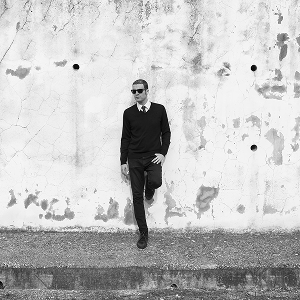
The trajectory of Rod Krieger is defined by a series of profound artistic reinventions. After thirteen years as the bassist for the renowned Brazilian band Cachorro Grande, Krieger pivoted to a solo career in 2018, eventually seeking a form of rural self-exile in a Portuguese village of only 140 inhabitants. This period of “de-digitalization” and socio-political distance served as the crucible for his most personal work, leading to a visceral return to the independent scene. Today, Progressive Rock Journal is proud to host the exclusive premiere of “Sessão Maquinaria,” a live session recorded in Juiz de Fora that captures the raw, improvisational heart of Krieger’s current musical evolution.
Watch in exclusive the full video for “Sessão Maquinaria” via the youTube player below:
Recorded on April 19, 2025, the session serves as a live transmutation of his second solo album, “A Assembleia Extraordinária” (2024). While his studio recordings often feature intricate Ethnic and electronic layers, Krieger sought to strip these compositions down to a high-voltage power trio format. Accompanied by the virtuosity of Paulo Emmery on bass and Marcelo Callado on drums, the performance rejects backing tracks in favor of a “Space Rock eremita” (hermit Space Rock) aesthetic. This approach emphasizes the tactile, solar energy of a live band, drawing inspiration from the free-form 1960s jams of artists like The Mutantes, The Who, and Syd Barrett.
The setlist functions as a bridge between Krieger’s solo milestones. It opens with “Despertar” from his 2020 debut, “A Elasticidade do Tempo,” before transitioning into the atmospheric textures of “Era” and “Todos Gostamos de Você.” The session culminates in a tribute to the Barrett-era of Pink Floyd with a cover of “Arnold Layne,” a choice Krieger describes as essential to the show’s Psychedelic, texture-driven identity.
— PRJ Exclusive Q&A with Rod Krieger —
Your studio albums are rich with electronic and ethnic layers. Why did you decide to strip everything back to a raw power trio format, with no backing tracks, for this session?
This idea had already been taking shape in my mind ever since I was recording the album. I knew I’d have to make some key decisions when putting the live show together, and I felt that starting off in this format would make for an interesting first impression. One thing that has always fascinated me is the way bands like Cream, Ten Years After, and Os Mutantes approach their live performances—they’re just a few examples of artists who aren’t afraid to venture off the beaten path within their own songs, taking the audience somewhere else entirely. Their shows become one-of-a-kind experiences, and there’s a tangible chemistry that flows between the musicians and the crowd. That’s something I really connect with. That said, I’m not ruling out the possibility of, down the line, stepping on stage with backing tracks, a big band, or even a stripped-down set with just piano, guitar, and voice. I enjoy taking chances, and it’s that very freedom that keeps me moving forward.
You’ve mentioned Syd Barrett as a foundational influence. How did his 1960s jam philosophy inspire the focus on ‘textures and atmospheres’ we hear in this performance?
He’s another good example of an artist who takes risks by exploring different textures live, but without it ever feeling forced, you know? Barrett left me a bit more focused on creating moods and atmospheres during improvisation, rather than just soloing all the time. He showed me that I don’t always have to be showing off virtuosic psychedelic playing—that atmospheres are absolutely crucial to the journey. I feel that sometimes a single feedback squeal is worth more than a thousand notes.
After years of creating music almost entirely on your own in Portugal, what did the collective energy of Paulo Emmery and Marcelo Callado bring to these songs during the Maquinaria session?
When I arrived in Rio de Janeiro, I could see there was a really cool scene happening: lots of bands playing live, musicians hopping between projects, that kind of vibe. Marcello Callado is a huge name in Brazilian music. He just put out his seventh album, Bardo, which is fantastic, and he’s involved in all sorts of projects, like Orquestra Imperial and film soundtracks. Plus, he spent ten years playing with Caetano Veloso and that says a lot. Then there’s Paulo Emmerry, a bassist who plays with Beach Coombers and a bunch of other artists, and he’s also a great producer. They already play together in other bands, so they have this connection that’s been building for a while. Our first rehearsal was long, every song had these big improvisation moments, and during the breaks, we ended up talking about the same bands and references. It felt like we’d been playing together for years. Everything just clicked. So, coming from Portugal, where I had a lot of alone time, and then meeting up with them, that brought a whole new energy. It really added to what I was going for in presenting the album, and you can see that in the Maquinaria session.
Sessão Maquinaria – Tracklist:
01. Despertar
02. Era
03. Todos Gostamos de Você
04. Arnold Layne (Pink Floyd / Syd Barrett)
Credits:
Musicians: Rod Krieger (Guitar/Vocals), Paulo Emmery (Bass/Vocals), Marcelo Callado (Drums).
Video Direction: Marcio Jorge.
Photography/Editing: Starly Lou Riggs and Leo Fazio.
Audio: Everton Surerus (Capture), André Brasil and Rod Krieger (Mix/Master)