

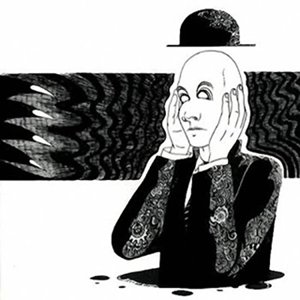
Pangea were an Italian quintet active during the mid-1970s, formed in Lombardy and ultimately destined to remain a brief yet noteworthy presence within the extensive underground landscape of Italian Progressive Rock. The project revolved around Mauro Paoluzzi, a musician and producer already well integrated into the national recording environment, who assembled a line-up of performers coming from different but complementary artistic backgrounds. Despite evident musical potential and a professional structural foundation, the band never managed to release its studio work officially during its active years, becoming known primarily among collectors and dedicated genre enthusiasts rather than the general public.
The formation featured Mauro Paoluzzi in multiple creative and instrumental roles, alongside vocalist Loredana Paoluzzi, former Madrugada members Gianfranco Pinto and Alessandro “Billy” Zanelli, and multi-instrumentalist Claudio Pascoli on saxophone and flute. Pascoli, a musician with strong Jazz roots and notable versatility, would later become associated with major names in both progressive and mainstream Italian music. Even at the time, the individual résumés were already significant: Paoluzzi had previous experience as drummer, composer and producer within several Italian Pop and beat formations before moving into studio production, while Pascoli was an increasingly requested session player involved in high-profile recordings. This convergence of technical proficiency and studio awareness granted Pangea a musicianship level above the average emerging band of the period.
The group signed with Philips, one of the major European labels of the era, and recorded an album entitled “Invasori” during the mid-1970s. The record, however, never received an official commercial release and survived only through a very limited number of promotional pressings intended for internal circulation and industry evaluation. The cancellation was linked to managerial and artistic redirection within the label, which progressively favored more commercially immediate sounds. This decision effectively brought the Pangea project to an abrupt halt and left the album in prolonged obscurity for more than a decade.
“Invasori” is conceived as a concept work centered on the idea of travel, unfolding through a sequence of interconnected musical sections rather than a conventional collection of stand-alone songs. The stylistic approach blends symphonic progressive structures with elements of Space-oriented atmospheres and melodic passages reflecting Italian songwriting sensibilities. The compositional framework alternates expansive, ambient segments with more defined rhythmic constructions, while keyboards, electric guitars and wind instruments shape the core of the sonic identity. Vocal arrangements frequently employ layered harmonies and ensemble passages, reinforcing the sense of narrative continuity across the album’s progression. From a production standpoint, the recordings reveal careful attention to balance, stereo placement and arrangement density, suggesting experienced supervision during the studio sessions.
Musically, the album avoids radical experimentation in favor of cohesive writing and controlled dynamic evolution. The expressive use of saxophone and flute adds tonal depth and movement without overpowering the harmonic architecture, while keyboards function as the principal structural element, often guiding transitions between sections. The rhythm section maintains a steady equilibrium between linear grooves and occasional metric variations, privileging musical coherence over virtuoso display. The result is a consistent and accessible work that merges melodic clarity with progressive construction in a restrained and mature manner, representative of a transitional phase within the Italian scene rather than its more Avant-Garde extremes.
For many years “Invasori” circulated exclusively as a collector’s artifact, with original promotional copies gradually becoming scarce and increasingly valued within specialized vinyl markets. Only in later decades was the album properly rediscovered and reissued, allowing broader critical reassessment and securing Pangea a definitive position among the hidden rarities of Italian Progressive Rock. While not universally regarded as an essential cornerstone of the genre, the record stands as a historically relevant document, emblematic of a period in which numerous technically accomplished projects were sidelined due to industrial and commercial decisions rather than artistic limitations.
Pangea therefore represent a classic example of partially unrealized potential: a band composed of musicians who would later achieve recognition through other paths, yet whose collective output remained largely unseen in its own time. “Invasori” endures as the testimony of a suspended musical vision, still capable of conveying the atmosphere of one of the most fertile and competitive phases of Italian Progressive Rock history.
Discography
1976 – Invasori (Promotional LP only)
Lineup:
Mauro Paoluzzi / Guitar, Drums, Vocals, Composition
Loredana Paoluzzi / Vocals
Gianfranco Pinto / Keyboards, Vocals
Alessandro “Billy” Zanelli / Bass, Vocals
Claudio Pascoli / Saxophone, Flute
[…] Pangea (ITA)This new instalment of Hidden Rarities focuses on Italian act Pangea, bringing renewed attention to a lesser-known chapter of the Progressive underground. An archival deep dive aimed at preserving and re-evaluating overlooked material. [Read the full Editorial here] […]