

In the fog-bound, organ-drenched cellars of London circa 1970, a seismic sound was taking shape. As the late-1960s Psychedelic Blues scene splintered, a heavier, more technically demanding strain of Rock burst through the floorboards. Amplifiers were pushed to their ragged limits, Hammond organs were whipped into thunderous swells, and rhythm sections broke free from basic timekeeping into manic, syncopated complexity. It was within this short-lived yet explosive crucible that Fuzzy Duck was born, a group that captured the absolute peak of early British Heavy Prog and proto-Metal before dissolving into Rock’n’Roll myth.
Formed in 1970 and fracturing by late 1971, Fuzzy Duck’s brief existence yielded a single self-titled studio LP and two exceedingly rare 7″ singles. Yet across these few wax grooves lies an astonishingly mature, razor-sharp body of work. Bridging the gap between the Blues-Psych past and the organ-Heavy, guitar-fuzzed horizon occupied by Atomic Rooster, Uriah Heep, and Deep Purple, Fuzzy Duck forged an artifact that has grown from a forgotten 1971 vinyl press into one of the most revered holy grails among global record collectors.
— The Line-Up: An Underground Supergroup in the Shadows —
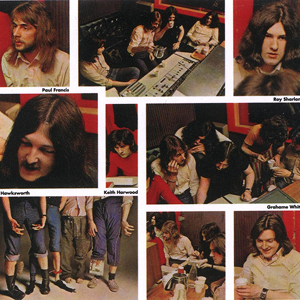
Though Fuzzy Duck operated in commercial obscurity during their brief initial lifespan, they were anything but beginners. Each member emerged from the fertile UK underground, possessing an enviable pedigree across pioneering Psych, Progressive, and Hard Rock outfits:
Mick (Doc) Hawksworth: Bass, vocals, acoustic 12-string guitar, electric cello (formerly of Psych pioneers Five Day Week Straw People alongside John Du Cann, and semi-legendary Psych-Prog trio Andromeda).
Roy (Daze) Sharland: Organ, electric piano, keyboards, vocals (formerly of The Crazy World of Arthur Brown and pre-Uriah Heep outfit Spice).
Paul Francis: Drums, percussion (formerly of The End, Tucky Buzzard, and later Tranquility).
Grahame White: Guitar, vocals, acoustic guitar (formerly of Andromeda and later of Capability Brown).
Garth Watt-Roy: Guitar, vocals (contributed session guitar/vocal support during the album era before fully replacing Grahame White for the post-album 1971 MAM singles; formerly of Steamhammer, The Greatest Show on Earth, East of Eden, and Living Daylights).
— Etymology, MAM Records, and the 500-Copy Myth —
The band’s tongue-in-cheek title originated from a classic British pub drinking game, built around a notorious linguistic spoonerism (“Duzz ‘E F-ck!“). The record’s visual presentation embraced this cheeky irreverence: a cartoonish cover illustration depicting a duck, evoking the vibrant artwork of era animation like The Hair Bear Bunch or a cozy English tavern sign. Yet beneath this cartoon facade lay a staggering display of heavy-hitting musical craftsmanship.
In 1971, the group secured a recording contract with the fledgling MAM Records. However, the original vinyl release was pressed in an infamous production run of merely 500 copies. With minimal promotional push from the label and a UK market flooded with Heavy Rock LPs, the album sank almost immediately upon arrival. This extreme scarcity, coupled with the astounding quality of the music within, turned the original MAM pressing into a legendary trophy for crate-diggers worldwide, with pristine original copies fetching up to $2,497 on second-hand platforms such as Discogs.
— Sonic Identity: Hammond Floods, Fuzz Guitars, and Driving Rhythms —
Fuzzy Duck’s sonic architecture sits right at the intersection of Heavy Prog, and Organ-driven British Hard Rock. The music align their aesthetic with heavyweights like Atomic Rooster, Uriah Heep, Deep Purple, Vanilla Fudge, Quatermass, Captain Beyond, Cream, and The Who.
The band’s signature sound is built on four distinct pillars:
Hammond Organ Floods: Anchored by Roy Sharland’s massive organ textures, drawing direct stylistic parallels to Ken Hensley (Uriah Heep), Manfred Wieczorke (Jane), and Tony Kaye (Yes).
Fiery Fuzz Riffs: Guitarist Grahame White unleashes a relentless assault of fuzz riffs, Blues-infused lead runs, and searing Psychedelic solos.
Virtuosic Rhythm Counterpoint: Mick Hawksworth’s busy, pulsating basslines weave intricate patterns around Paul Francis’ frenetic, animated drumming, a performance frequently likened to the unstoppable kinetic energy of Keith Moon or Animal from The Muppet Show.
Compositional Balance: The band mastered a dynamic duality, balancing immediate, ear-worm vocal hooks with complex Progressive structures, unexpected time signature shifts, and Heavy, infectious grooves.
— The Album: Fuzzy Duck (1971) —
Side A: Dynamic Riffs, Heavy Hammond, and Jazz-Rock Rhythms
Time Will Be Your Doctor: The LP opens with a high-octane prescription of bombastic British Rock. Driven by booming Hammond organ, wild fuzz guitar, and a frantic rhythm section, the track’s infectious hook was so potent it was also covered by drummer Paul Francis‘ parallel outfit, Tucky Buzzard.
Mrs. Prout: A stentorian tour de force operating on high-voltage energy. Supported by a throbbing, anabolic rhythm section, the track stands out for its subtle Canterbury Scene undertones, featuring Soft Machine and Hatfield-esque Jazz-Rock bass and drum interactions, paired with extended, Ray Manzarek-inspired keyboard textures and Psych-drenched guitar lines.
Just Look Around You: A thunderous, full-velocity Heavy rocker that barrels forward on a foundation of granite-solid bass and Heavy organ emphasis. Beneath its sonorous, foot-stomping Hard Rock exterior lie intriguing, subtle Folk undertones.
Afternoon Out: Closing Side A, this track fires at full-force fortissimo with a pulsating late-60s Psych-Blues jam feel. Built around extended guitar soloing and Paul Francis‘ wildly animated drum work—reminiscent of Animal from The Muppet Show, the piece steadily builds into a dramatic crescendo finale.
Side B: Optimism, Hard Rock, and Duck Quackery
More Than I Am: Side B opens on an uplifting, Hammond-drenched note, combining Uriah Heep-style Heavy prog dynamics with optimistic lyrics “I try to be more than I am, I’m doing all I can, And I’m more happy than, The greater could be man.” The track balances Heavy organ power with improvisational Psych guitar textures.
Country Boy: An aggressive, hydraulic-ram-style hard rocker featuring a ballsy, take-no-prisoners attitude and relentless driving energy.
In Our Time: A melancholic, emotional standout boasting window-rattling guitar and keyboard jams. The track exhibits timeless appeal through its Hard Rock dynamics reminiscent of Atomic Rooster.
A Word from Big D: The album concludes on a playful, eccentric note. Keyboardist Roy Sharland delivers humorous “ducking vocals” while the band uses synthesized instrumental manipulations to generate literal duck quacks to close the LP.
Non-Album Singles and Archival Bonus Tracks
Following Grahame White‘s departure, Garth Watt-Roy (who had provided extra guitar/vocal support during album sessions) stepped up as lead guitarist for the band’s post-album 1971 7″ singles:
Double Time Woman: Released as a 1971 MAM 7″ single (backed with “Just Look Around You“), this track pivots away from the album’s organ-Heavy Progressive textures into a pure 100% Hard Rock and proto-Heavy Metal benchmark.
Big Brass Band / One More Hour: Released as a MAM 7″ single in 1971. “One More Hour” features brass/horns, operatic vocal styling, and a lighter organ presence, marking a commercial shift toward early AOR and brass-Rock.
No Name Face: A previously unreleased archival track from the band’s original studio sessions that remained buried until late-era CD reissues unearthed it for collectors.
— Legacy, Collector Status, and Reissue History —
Following their brief release window in 1971, Fuzzy Duck quietly disbanded, with its members dispersing into groups like Capability Brown, Steamhammer, and Tranquility. For nearly two decades, the album remained an obscure legend spoken of only in elite collecting circles.
The narrative changed drastically in 1993, when German reissue label Repertoire Records delivered the first ever CD reissue of the album in a mini-vinyl replica sleeve featuring four bonus tracks. This release introduced Fuzzy Duck to a global audience. Later editions, such as UK label Aftermath Records‘ comprehensive 11-track CD (which added the unearthed session track “No Name Face“), cemented Fuzzy Duck‘s status as an essential cornerstone of early-1970s British Heavy Prog.
— Final Appraisal —
Fuzzy Duck stands as a towering artifact of 1971 British Progressive Rock. While the group prioritized raw power and heavy grooves over extended, classical symphonic suites, their recorded legacy excels through sheer technical command and relentless energy. By exalting organ-drenched momentum and fuzz-laden riffs, Fuzzy Duck created a timeless, vibrant record that continues to thrill both Heavy Prog devotees and proto-Metal historians alike.
— Discography
| Release / Format | Year | Label | Notes / Market Value |
|---|---|---|---|
| Fuzzy Duck (Vinyl LP) | 1971 | MAM Records | Original UK release; limited to 500 copies; duck cover; holy grail collectible. |
| Double Time Woman / Just Look Around You (7″ Single) | 1971 | MAM Records | Original 7″ single release; features pure hard rock/proto-metal single track. |
| Big Brass Band / One More Hour (7″ Single) | 1971 | MAM Records | Original 7″ single release featuring brass-infused Hard Rock. |
| Fuzzy Duck (CD Reissue) | 1993 | Repertoire Records | First ever CD reissue; mini-vinyl replica sleeve; includes 4 bonus single tracks. |
| Fuzzy Duck (CD Reissue) | CD Era | Aftermath Records | UK CD edition featuring all 11 tracks, including the unreleased bonus track “No Name Face”. |
| Double Time Woman / One More Hour (7″ Reissue) | 2012 | Reflection | Official vinyl 7″ reissue; second-hand market value ranges from. |
Tracklist:
01. Time wil be your doctor (5:11)
02. Mrs Prouts (6:48)
03. Just look around you (4:24)
04. Afternoon out (4:59)
05. More than I am (5:33)
06. Country boy (6:04)
07. In out time (6:41)
08. A word from bid D (1:41)
Bonus Tracks on Repertoire Reissue:
09. Double time woman (3:00)
10. Big brass band (2:58)
11. One more hour (3:59)
12. No name face (3:03)
Lineup:
Mick (Doc) Hawksworth / Bass, Vocals, Acoustic 12-String Guitar, Electric Cello
Roy (Daze) Sharland / Organ, Electric Piano, Vocals
Paul Francis / Drums, Percussion
Grahame White / Electric & Acoustic Guitars, Vocals
Garth Watt-Roy / Electric Guitar, Vocals on the Bonus Tracks
Vocals and guitars on the bonus tracks was Garth Watt-Roy. I was road manager for the band!
Hi Stirling, thank you so much for this incredible piece of information! To be honest, that was one of the very first articles I wrote when I launched the Journal, and it was definitely too short for a legendary band like Fuzzy Duck. Your comment gave me the perfect excuse to completely rewrite and expand the article as it deserves, adding the right credits to Garth Watt-Roy. Thank you again!