

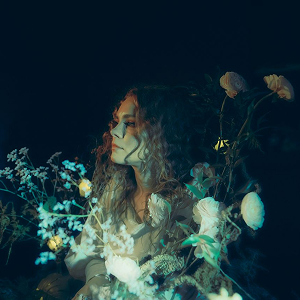
Welcome to Progressive Rock Journal. Today we are joined by Dikajee, the UK-based singer, composer, and multi-instrumentalist whose music seamlessly weaves Folk, Progressive Rock, Neoclassical, and Metal. Following her acclaimed 2021 debut “ForgetMeNots,” she returns with her second full-length album, “The Frame.” In this conversation, we explore the creation of the new record, her personal journey, international guest collaborations, and her vision for live performance.
It has been a few years since the release of “ForgetMeNots” in 2021. Looking back at that debut, how do you feel your artistic identity and songwriting approach have evolved leading into “The Frame”?
Dikajee: “Mostly I feel like I’ve grown more confidence in expressing who am I at the moment artistically and personally; I’ve learned to trust my own vision. Personal experience, professional experience, live shows make you grow a lot as an artist and as a person, it’s hard to tell which is the first like a chicken and an egg; I think the further I go the more brave I become in how I express myself, what sides of my artistic identity I expose when and however I feel; I became more uncompromisingly dark, but my main creative ethics are still the same; I’ve definitely been through things during these years that are enough for a lifetime; loss of my father, my cat, worlds collapsing around me, moving countries, and somehow I’ve never stopped working on music; looking back, I feel I had a constant adrenaline rush for several years in a row and now when this album is out I feel very grateful for whatever crazy power has been moving me towards it.“
In 2023, you relocated from Saint Petersburg to the UK under a Global Talent Visa and rebuilt your band with a new lineup. What were the main creative and practical challenges of establishing your musical foundation in a new environment?
Dikajee: “Probably realising that I’ll have to play and work on this music with new people, who have a different approach and style; I’ve never sort of formally ended our Saint Petersburg lineup, it still exists in some invisible parallel reality, but our drummer moved back to Belgium, and other musicians live in different countries now; so I realised that as an independent artist I just can’t make it work at the moment;
The current lineup is different, and it keeps evolving, now that we feel more confident I hope to bring back more orchestral sound to our live shows… at some point;
The new lineup is truly unbelievable!
But I have to admit that building a new life from scratch was very hard. I’ve started building my Kickstarter campaign while I was still in between Airbnbs and didn’t have a home here in the UK, that was really adventurous! I guess needed this project as a little straw I could hold on to not to lose myself in the hassles of the immigration process.“
“The Frame“ was made possible in part through a successful Kickstarter campaign. How did having such direct support from your listeners impact your mindset while working on the alIbum?
Dikajee: “It honestly feels EPIC! I feel so blessed and privileged to know that people trust me as an artist and probably as a person as well to be contributing financially and by spreading the word into something that they haven’t heard yet! It puts a lot of pressure on me too, cause I produce and ship everything on my own and things take longer than expected, parcels got lost, platforms bug sometimes; so it’s all on me; So, to be completely honest, it’s also very hard at times; I almost never have a day off; bless my local post office people, they are being so patient with me haha;
But I adore that connection with these beautiful souls who love my music, it really helped me to move on during the hardest times. I just hope that my music can do the same for them <3“
“The Frame“ addresses deeply personal and heavy themes, including personal grief following the loss of your father, the reality of war, and the impact of patriarchal systems. How did you approach translating such intense experiences into musical compositions?
Dikajee: “By being very raw about everything, very direct, deeply sincere; the title song really describes the funeral and my thoughts and images popping in my mind the first few days after I’ve got the dreadful news of my father’s passing; the title, the song, the album cover, all came to me at the same time, I remember walking down the street on my way for some funeral arrangements and I just had this phrase in my head, “death is framing, framing everything”; and this deep almost inhuman vocalising in the intro of the title song is very ritual, very “othersidely”. I wanted to portrait a sort of a fantasy animal crying somewhere deep in the forest at night for something that deeply broke their world, but no-one understand them as they don’t speak, it’s like being speechless and caught in a cage, in the frame; and we only hear them from far away and experiencing a cold shiver from somehow feeling the endless sorrow behind these howls. But grief doesn’t work just one way, there are many different moods and vibes in this album; many other shades of misery haha; there’s also anger, hope, strength, wilderness.
and also it feels like I’m not done really, I think nowadays many people have enough trauma for the lifetime of producing dark music and poetry 🙂“
What does the title “The Frame” symbolize within the context of these new songs and the overarching narrative of the record?
Dikajee: “Here is a line from the album description I used for my Kickstarter page:
‘I saw death as a frame that we’re all are captured in.
No one is getting out alive from this life.
In this respect, death makes us all a family within that frame so the frame holds a family photo of all living‘
Death is framing everything, it’s woven into the fabric of life like ivy twines around the gravestones.
if I’d try to describe it in simple words; but it’s also very cinematic word, there are lots of great songs with that word in it and I love the variance of interpretations of that word/concept.
This album is about grieving, but it’s also about embracing this world as it is, about cherishing memories, staying strong and finding yourself again in the abyss of grief.“
Your music frequently balances Dark, tragic undertones with moments of hope and emotional uplift. How do you find that equilibrium between grief and resilience when writing?
Dikajee: “That’s cause none of our emotions are just there all the time; grief is not just a blanket under which you just exist all the time, to me it’s more like a huge bag of rocks that you’re constantly wear with yourself; you can still enjoy the sunset, dancing to prog and hanging out with friends, reading books, painting and enjoying the sun; it’s like I’m still me, very free spirit person full of hopes and love for this world, people, music, I love and believe in people, I make jokes, talk to trees, animals and objects, houses and rooms; I like going to gigs and dance; I meet with my friends, I read books and paint. it’s just nothing is the same, you’re not completely the same, dancing with a bag of rocks is not the same as without it; and it’s just the same in music; I live through it and express everything through it.
but perhaps there is a medical term that can describe that;
‘equilibrium between grief and resilience’ 🙂
“Gunpowder” was released alongside a striking music video about overcoming the limits of the mind and body. What was the core inspiration behind this track and its visual storytelling?
Dikajee: “How much time do you have? x
When I wrote the script for that video, I had three different characters in mind : the blind, the child and the ghost.
All of them ore pieces of one broken soul.
All of them are somewhat a sides of one person:
THE BLIND. It’s one’s consciousness; we born as “blind” the only thing we know is that we are all mortal, and at the same time this is the very thing that we learn to live ignoring to exist. We don’t know what’s going to happen tomorrow, but we continue to live, to breath, to try to embrace the chaos and get up every morning and step into the unknown. Even the most “stable” and “simple life is a the result of an infinite number of events, resonances and coincidences. We are walking into the future being blind. But we are humans, that’s what we do, we step forward, we are curious and we want to survive.
THE CHILD – the child is a physical, sensual, playful and wild character. It’s someone who has no boundaries yet. Wanting to discover, to desire, to try every fruit that is out there, who doesn’t know how to be polite and can be very loving, and aggressive at the same time. Someone who hasn’t socialised yet. It’s a baby in you, it is he who wants to indulge and not have any limits. Usually controlled by THE BLIND 🙂
THE GHOST – is experience. A child who got hit by the fire, someone who’ve seen unreciprocated love, illnesses, losses, disappointments. Perhaps it’s both previous characters together, the “result” of the way, the path.
They don’t remember their own face anymore, their own laugh, they can’t fall in love, or don’t allow themselves to. They are carrying a heavy burden (later you’ll see that from the video)
Gunpowder video will be a story of overcoming the limits of the mind and body.
The Blind will see, the Child will light the fires and the Ghost will has a face again.
This is a life of a human.”
On “Home of the Wind,” you mentioned the bittersweet feeling of moving forward during times of grief, describing it metaphorically as flying on “black wings.” Could you share more about the emotional backstory of this piece?
Dikajee: “This song is about how some great things in life often happen alongside the worst things; it happens to me all the time, but especially with huge things; I always wanted to move countries, but it happened during the time of grief and loss, as you’ve mentioned, I’ve lost my father, but I also lost my lovely cat later the same year; she was my buddy and I still can’t have another pet just cause I’m so afraid to feel that sad again if something happen; And I think it’s a very common experience – when your carrier is going up, something goes wrong at home and other way around; and it’s almost like you just can’t have a beak; adult life is so hard! 🙂
But I’m trying to believe in the power of beauty, music and love; I still want to feel like I’m following my dreams; I’m not confident all day every day, I’m not sure if I’m just trying to follow the only scenario I know regardless of what’s happening to the world around me; But still I won’t let fear and doubts to make my decisions for me; This world is not what I thought it was, but I still want to explore it, cause I know; there are good things too! So I’m flying with black wings and a broken heart, but I still chose to fly.“
“Friar’s Lantern” carries a poignant message, acting almost like a reassurance in moments of transition while reconnecting with the inner child that still dares to dream. How did this concept come together musically and lyrically?
Dikajee: “It’s just how I felt; I’m happy with this song, I think I managed to create a song that when I hear it or sing it I’m still shocked I wrote that! Ryan Martin (JammerZine) described “It can sound like a farewell, a warning, a comforting hand on the shoulder, or a reminder that the reckless little dreamer buried beneath years of adult nonsense might still be breathing” and I can’t express it better
lyrically there are some easter eggs with some phrases form Nightwish (their Century Child album), Skye boat song and other songs I love with similar moods.”
“The Frame“ features an impressive international roster of guest artists, including Jonathan Noyce, Varijashree Venugopal, Guillaume Bernard, Vikram Shankar, German Vergara, and Frida Bollani. What guided your choices when inviting each guest to participate?
Dikajee: “Love and admiration for their work, their personality and our friendships <3“
You teamed up again with Guillaume Bernard of KLONE on “Friar’s Lantern,” following your previous collaboration on “ForgetMeNots.” What makes your creative dynamic with him work so well?
Dikajee: “He’s just an amazing, very open minded and open hearted creative being and probably one of the most hardworking people I’ve ever met! Every time he participates on my albums he does it with such a delicate, thoughtful touch! He has an exceptional view on music and a unique sense of harmony!“
“Gunpowder” features Snarky Puppy’s Varijashree Venugopal alongside bassist Jonathan Noyce. How did their distinct musical backgrounds blend into the track’s arrangement?
Dikajee: “It’s insane huh? But it works! I think we’ve done something unique there! But that was the purpose! To blend the unblendable 🙂 And I think it sounds very refreshing; very unusual genres and styles cocktail; rock, carnatic, opera, metal, folk, funk, we had lots of fun there!“
On songs like “Imaginary Doctor” featuring Frida Bollani or “Travel Through Time” featuring German Vergara, how did you manage the remote recording and collaborative workflow across different countries?
Dikajee: “Mostly, by planning in advance (very much in advance) and thanks to the modern technologies! 🙂 To be fair, Frida lives in London nowadays and working with German we’ve never met before our UK tour together last year; so hail to the Internet!“
Your vocal style spans an extraordinary range, moving from Classical Operatic dynamics to Folk melodies and Extreme Metal expressions. How do you approach structuring vocal arrangements that shift so dramatically across genres?
Dikajee: “Thank you for your kind words! I’ve been experimenting with my voice all my life and I’m not very happy when people just say “what a lovely voice”; not that I don’t appreciate it, but there’s much more to it than just “lovely” Cause there’s a lot experiment and instrumental singing, I use my voice not to just “sing lovely” (that I don’t mind doing as well) but also to create an acoustic scenery, texture, rhythm and such; I can be scary, powerful, fragile, witchy etc..
As for the approaching, I think it’s just doing what music wants and moving where the emotions and the arrangement development is taking me; and some practice behind it in order to technically being able to have all these colours in my palette.“
The album features rich acoustic instrumentation, grand piano, and strings alongside Heavy guitars and complex rhythmic sections. How do you and studio arranger Dmitry Irinovich balance these Classical and Rock elements?
Dikajee: “We both are involved in developing orchestral ideas sometimes. I compose all piano parts and riffs that the song will be built on, I know where things need to start happen, Dima is brilliant in understanding sounds and bringing more rhythms and tones to the music; he does most of the synths too. He wrote all the strings parts for Gunpowder for example and Gulia Naumova recorded them; I wrote tube parts for HOTW and sampled violin improvisations played by Sedna and how they move around in your ears to create the right feeling. Dima wrote all the violins and synths for the title song and he truly lived through it. Christian Ayala Brough all the guitar arrangements and Victor Sankov wrote bass part. I love working with them, they are brilliant and this album is what it is thanks to all the musicians who play there. Sometimes it’s complicated cause we may see things differently, but I just try to always follow the image in my had and be kinda dedicated to it. As David Lynch once said ‘the idea is the whole thing. If you stay true to the idea, it tells you everything you need to know, really, You just keep working to make it look like that idea looked, eellike it felt, sound like it sounded and be the way it was‘”
Your live schedule includes both intimate solo support sets for the John Hackett Band and full-band performances supporting The Paradox Twin. How does the energy and arrangement of the material change between these two formats?
Dikajee: “Very much! It’s a different experience both for me and the audience; solo gigs are very intimate and band gigs are epic; although, there are moments of epic in my solo playing and moments of chamber clarity in the full bad concerts too 🙂“
Do you have any memorable stories or unexpected moments from recent gigs or festival appearances, such as the Nene Valley Festival?
Dikajee: “I think I’ve never seen such a long queue at our merch table! I couldn’t see the end of it! That was so beautiful and..rewarding perhaps; it’s a beautiful festival and I’d love to play there again!“
Operating at the intersection of Folk, Progressive Rock, Neoclassical, and Metal, how do you perceive today’s Progressive music scene? Do you feel audiences are becoming more receptive to genre-defying projects?
Dikajee: “Absolutely! Go to any prog festival! Lots of prog people are actually melomans who want to be surprised and just appreciate good art, good playing, good energy;“
As “The Frame” prepares for release, what are your primary goals and hopes for Dikajee in the coming year?
Dikajee: “More live gigs, we love playing live; the more we play the more people we can share magic wtith, connect, feel the energy of each other (musicians and the band) and it makes everyone feel free and inspired. Well, it inspires me to keep working on new music, stay disciplined and love life 🙂“
We would like to thank Dikajee for taking the time to speak with us. Her new album “The Frame“ will be released on November 6th and is available for pre-order via Bandcamp. Stay tuned to Progressive Rock Journal for our upcoming review of the record and tour updates.
Purchase “The Frame” here: https://dikajee.bandcamp.com
Dikajee Live:
22/11 – The Thames Side Session, Staines, solo
30/11 – London, WaterRats, full band (supporting The Paradox Twin)
04/12 – Manchester, Empty Space, full band (supporting The Paradox Twin)