

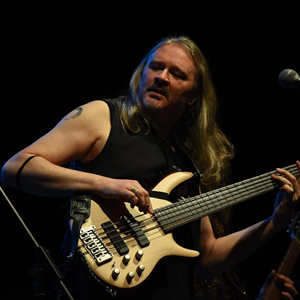
Celebrating three decades of artistic exploration, Ligurian Esoteric-Prog-Metal pioneers Il Segno del Comando return with “Sublimazione – Live,” a meticulously crafted live album that revisits the band’s rich catalog with a lineup refined over years of dedication and experimentation. Released through Genoese label Nadir Music, this self-produced milestone captures performances from their winter tour and includes bonus tracks from a 2022 Netherlands show, documenting a continuous evolution of both musical skill and conceptual depth. With “Sublimazione – Live,“ the band not only honors its legacy but also exemplifies the refinement and spiritual rigor that has shaped its identity. Progressive Rock Journal spoke with Diego Banchero to delve into the album, the creative process, and the philosophy underpinning three decades of Progressive Esoteric Metal.
“Sublimazione – Live” marks thirty years of Il Segno del Comando. How does it feel to revisit your older material in a live setting after such a long career?
Diego: “We’re always thrilled and excited to revisit songs from our past. We feel a strong sense of continuity that connects every moment of our discography. We sometimes happen to have opportunity to rearrange one of our songs, and we always approach the experience with great enthusiasm. Sublimazione includes both recent songs and tracks from our early days, and assembling this track list came very naturally.“
The album title, “Sublimazione,” suggests themes of evolution and purification. Could you expand on how this concept influenced the selection and interpretation of the tracks?
Diego: “For years, we have been passionate scholars of various disciplines related to inner growth and spiritual evolution. Each of our albums chronicles a stage in our evolutionary journey. Sublimazione, as a live album, is further evidence of the growth path of both the project and the people who have carried it forward over time.“
With live recordings spanning Italy and the Netherlands, how did the differing audiences and venues shape your performances?
Diego: “Italian audiences are used to seeing us live quite often, and some fans follow us even to quite distant locations. We had already played at Spazio Webo a few months earlier, and the local audience was already familiar with us. This time, too, the audience was very appreciative. In contrast, we were not really well-known in the Netherlands in 2022, but t-Blok welcomed us with great warmth, responding enthusiastically to our musical offering from the very first notes! It was a truly beautiful moment in Il Segno del Comando’s artistic journey.“
What role does the new drummer, Paolo Serboli, play in the band’s evolving sound and dynamic?
Diego: “Paolo integrated very easily into the band, beginning with a very respectful approach to the songs. He primarily chose to perform with a drumming style that did not deviate too much from the previous drummer. It was the band other musicians that encouraged him in reinterpreting the various tracks, using his own unique way. We want his artistic personality to emerge unrestrained. His talent will certainly be fully appreciated in future compositions (we have already recorded new material with him, which has not been released yet, and the results are excellent). His impact undoubtedly enhances the hard rock component of our sound, and this aspect is already evident in Sublimazione.“
How do you approach translating the intricate compositions and esoteric concepts of your studio recordings into a live context?
Diego: “This comes as very a natural process. The sound and themes of Il Segno del Comando are our language, and we do not have any major difficulties reproducing what we recorded on our albums live. The transposition happens very spontaneously.“
Over three decades, your lineup has seen significant changes. How has each transition influenced the musical and conceptual direction of the band?
Diego: “In their early years (from 1995 to 2002), the band had the opportunity to take a risks with an idea that was against the trends at that time. Then, between the first and second albums, the lineup changed almost completely, and we were not able to stabilize it, so it was not possible to give continuity to the project. The breakup was inevitable. The resulting setback kept us on hold for almost ten years. Without taking anything away from the insights of the initial stages (which were indeed relevant in establishing a starting point for the band’s stylistic line), I feel like saying that the true Il Segno del Comando began to take shape during the making of the album Il Volto Verde. From that experience, I gathered around me musicians like Roberto Lucanato or Davide Bruzzi: they were up to the task, and supported creating some of band’s best moments, also demonstrating great live skills. Since 2014, lineup has undergone some changes (such as the arrival of Riccardo Morello and Beppi Menozzi, as well as most recent joining of Paolo Serboli), but the band’s solidity has never wavered, and in fact it has gradually strengthened.“
Could you describe the balance between individual musicianship and collective expression in your live arrangements?
Diego: “Band members are increasingly involved in developing the arrangements and orchestrations. As time goes by, they are also increasingly contributing in terms of composition. It took a rather long period of collaboration, but now we all are really well-tuned. Each of band’s members is a cog in a perfect mechanism, and I’m proud of the progress this team has made over the years. There is an harmony among us, that makes all things flow very smoothly, also when performing live. Obviously, in terms of individual expression, Il Segno del Comando gives a lot of space to the solo parts, and I think this aspect is easily recognizable to anyone who listens to us. The thing that not everyone knows isthat each one of us primary focus is on working for the team. Making whole project work at its best is everyone’s priority.“
Il Segno del Comando is known for integrating Esoteric and spiritual motifs in your music. How do you ensure these ideas remain authentic and engaging for listeners?
Diego: “Our albums are a “logbook” of our personal journey of spiritual evolution. Our role is not to set ourselves as teachers or gurus for anyone. We can only be happy if someone finds comfort or inspiration in our themes, but we never lose awareness that “the path to the light” remains individual. Everyone must find his or her own way. It is wonderful to meet traveling companions along the way and share part of the journey with them, but we are definitely sceptical on following any of those who take the role of teacher, or who present as role models. Among our fans, many also simply appreciate our music, without questioning too much about the content that emerges from our lyrics upon deeper analysis. We are deeply connected to and grateful for these people as well.“
What inspired the inclusion of the specific bonus tracks from the 2022 Netherlands concert, and how do they complement the Italian recordings?
Diego: “At our level, it’s not easy to guarantee good-quality live recordings. These two concerts, however, were recorded quite well, and we took advantage of the opportunity to document two different moments in Il Segno del Comando’s career, that were particularly important to us. The idea of releasing a live album arose right after the Dutch date, where we were welcomed by a staff member (Background Magazine) who produced high-quality audio and video footage. However, we waited for the Webo material and decided to use it as a starting point, as it reflected the full band and the current lineup.“
Could you explain the creative process behind key tracks like “Il Domenicano Bianco” and “La Taverna dell’Angelo”?
Diego: “The two songs you mentioned belong to very different eras, and process of their creation were also quite different.
When I wrote “La Taverna dell’Angelo” in 1995, I prepared demos of the music with an electronic drum kit, bass and keyboards using a 4-track recorder. The rest was then added directly in the studio, using a good dose of improvisation. It’s worth noting that that album was an analog recording of live sessions. “Il Domenicano Bianco” is the result of much more thoughtful work. I prepared basic audio tracks on which everyone customized their parts. Davide Bruzzi, who is currently in charge of pre-production, coordinated subsequent arrangements. The studio work was also a bit more complex. Both songs have in common that they are rooted in my compositional approach, which has remained similar over the years, but they use different means to achieve its realization.“
How do visual elements, such as artwork by Paolo Puppo and your stage presentation, enhance the overall experience of your music?
Diego: “Our intention has always been to convey works with multimedia characteristics. We have been strongly inspired by soundtrack music and even we used the title of a television series as our moniker. With the resources available, we try to combine graphics, painting, sculpture, and literature (remember that along with L’Incanto dello Zero, we also published Cristian Raimondi’s book, that serves as a base for the album’s concept). In this context, Paolo Puppo has become fundamental collaborator because his work allows us to translate in images much of the content and symbolism that characterize our themes. Regarding my presentations, I should say that I don’t think they provide any particular enrichment. These remain more of a technical requirement.“
Mixing and mastering were handled internally by you. How does self-production affect the final artistic outcome compared to external collaboration?
Diego: “For this production I’ve been working in my studio without budget constraints, we took a long time to achieve a really satisfactory result. This isn’t always possible. Often, record companies and recording studios are involved, and you have to deal with predefined budgets. In these cases, you may have to make some compromises on quality. However, I must admit in the last years, working with Tommy Talamanca at the Nadir Music studio, we have always achieved fully satisfactory results.“
Looking back, which moments in your thirty-year journey do you consider pivotal for the band’s evolution?
Diego: “Definitely the presentation phase of the album Il Volto Verde. During that period, we formed the backbone of the lineup that has brought Il Segno del Comando to this day, and which has gathered tremendous acclaim and satisfaction year after year.“
How do you see the relationship between musical experimentation and accessibility in your live performances?
Diego: “Our approach to experimentation is quite peculiar as melodic content has always been the most important thing. This specific aspect has never been overlooked; especially not in favor of any systematic breaking of musical moulds or schemas. That would be a typical trait of other, more “anarchic” art forms. I think this aspect has ensured, over time, a significant degree of accessibility to our artistic offering. For the same reason, we now enjoy a very diverse fan base, made up of people passionate about the most diverse musical genres.“
Progressive and Esoteric Metal often explores philosophical and spiritual themes. How do you maintain clarity and cohesion while exploring such abstract ideas?
Diego: “I have studied these disciplines for many years and have built my life around inner growth. I believe that the topics I focus on (which are carefully selected over time) are anything but abstract. They rather find practical applications in everyday life.“
Can you share insights into how collaborations with other Italian Progressive acts, such as Balletto di Bronzo, have influenced your work?
Diego: “Il Segno del Comando has certainly drawn inspiration from some historic Italian bands like Balletto di Bronzo (whom you mentioned), Goblin, Antonius Rex, Jacula, and others, who combined prog with darker atmospheres. The work of these great masters helped us find our own path, drawing us closer to certain sounds. Over time, we’ve had the honor of collaborating with some of them. Claudio Simonetti and Gianni Leone even guested on one of our albums (Il Volto Verde – 2013). We’ve shared the stage several times with Balletto di Bronzo and Goblin bands (Claudio Simonetti’s Goblin and Goblin Rebirth). The relationship that binds us to these artists are very cordial. The influences that have inspired our music are very broad and are not limited to the fundamental Italian prog scene of the 1970s. We’ve drawn from many musical genres and spanned various historical eras.“
Finally, what are your aspirations for Il Segno del Comando in the coming years, both in terms of live performance and future recordings?
Diego: “I hope to play as much as possible. We’ve had limited opportunities to perform abroad so far, despite our records being sold in many countries around the world. We’re trying to open up channels in that direction. Recording remains as important to us as performing live, and we intend to continue releasing new works in the years to come. The band is growing and performing better and better. This makes us determined to continue our journey. We hope to do more and more! Thank you for this wonderful and comprehensive interview!“
With “Sublimazione – Live,” Il Segno del Comando offers not just a retrospective of three decades but a vivid demonstration of the band’s ongoing vitality and artistic rigor. Every note and nuanced performance reflects years of disciplined evolution, spiritual inquiry, and creative boldness. For both long-time fans and newcomers to their esoteric-prog-metal universe, this live album is a testament to a group that remains deeply committed to the integrity and evolution of its craft. Il Segno del Comando continues to navigate the intersection of technical mastery, conceptual depth, and expressive performance, proving that true artistry only grows stronger with time.
Purchase “Sublimazione – Live” on Bandcamp: https://isdc.bandcamp.com/album/sublimazione-live
[…] Read our Exclusive Interview with Diego Banchero here: [Interview] Exclusive interview with Diego Banchero of Italian Esoteric-Prog-Metal pioneers Il Segno… […]