

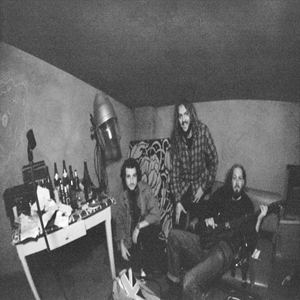
Emerging from the fertile underground of early ’90s Italy, Deadpeach became one of the pivotal forces in bringing neo-Psychedelia and Heavy Psych to the Italian scene. Over thirty years since their first rehearsal sessions, the trio now revisits their roots with “The Demo Tapes,” a digital reissue of their earliest cassette recordings, “Green” (1995) and “Touch Me I’m Peach” (1996). Beyond nostalgia, these demos offer a rare glimpse into the raw experimentation, DIY spirit, and improvisational energy that shaped the band’s identity. In this exclusive interview, we dive deep into
Deadpeach ’s formative years, their evolution through the underground, and their reflections on music, creativity, and the enduring appeal of imperfection.
Can you take us back to the very beginning of Deadpeach? How did the band form, and what drew you to each other musically?
The original Deadpeach lineup was Steve on bass, me, and Massimo on drums. We met by chance — I was playing in a shy little band, then met Steve and Giommi, who had a real punk attitude. Without even rehearsing, they wanted to play live right away. That’s how the spark started. We connected instantly through a shared love for classic rock, psychedelia, and what later became known as grunge.
In the early ’90s, what was the Italian underground scene like, and how did it influence your sound and ethos?
In the early ’90s there were many rock clubs, squats, and ARCI circles — places like Slego, Modern Casino, and Vidia. Rock was strong, and the indie scene was starting to attract bigger labels. Communication was slower but full of life — fanzines, demo tapes, and DIY labels everywhere. It was a vibrant time, especially with the punk and hardcore scenes growing in squats.
Who were your biggest musical influences at the time, both local and international?
We focused a lot on foreign music. Steve loved the new psychedelia — bands like Loop and Spacemen 3 — while I followed Screaming Trees, Mudhoney, and Dinosaur Jr. I was also drawn to punk and hardcore for the raw anger in the music. In Italy, bands like Kina and Negazione were making a mark. We spent a lot of time in clubs like Slego, soaking up the rock scene. I’ve always listened to a wide range of music, never sticking to just one genre — from Italian progressive rock and ’70s singer-songwriters to the new wave scene.
Your first demos, “Green” and “Touch Me I’m Peach,” were recorded live in a single day. What challenges and advantages did that method present?
It was mostly about time and money. We came to the studio with the songs well-rehearsed, did a couple of takes, and kept the best one. It required full focus — one mistake and we started over.
Working with Paul Chain for “Green” must have been significant. How did his presence shape the recording?
At that time, Paul Chain was widely recognized in Italy. He had worked with musicians like Lee Dorrian (Napalm Death, Cathedral) and was both a talented musician and producer. He was ahead of his time, shaping what would later become the stoner and doom scene — a true pillar and iconic figure, respected across Italy and beyond for his vision and sound.
DIY ethics are central to your story. How did creating your own zines, artwork, and distribution affect your creative process?
Doing things in a DIY spirit was central to us — recording, printing, and distributing our own material required a lot of effort and passion. Later, we also worked with labels like Nasoni Records and Godown Records, but even then we always presented the finished work. Managing contacts, recordings, shipments, and shows takes a lot of time, so you really have to love it, because often it’s more about dedication than profit.
Looking at the original “Green” demo, what stands out to you now in terms of performance, tone, and energy?
The songs on Green were more traditional in structure — verse, bridge, chorus. Later, starting with our first LP Psycle, we moved toward more jam-like, psychedelic suites, though some tracks still keep a canonical structure. Honestly, Green is a demo tape with no overdubs or corrections, and for being recorded in a single day, it’s not bad at all — especially considering it captured a whole year of work.
“Touch Me I’m Peach” shows a shift toward Garage Psychedelia and stoner elements. How conscious was this evolution at the time?
On Touch Me I’m Peach, the punk and grunge influences are more noticeable, giving the sound a rawer edge. A couple of tracks later ended up on our first 7″ vinyl, 2 in 4, which is definitely a garage punk and psychedelic record.
Can you describe the atmosphere of the recording sessions for “Touch Me I’m Peach,” especially improvising lyrics and performing covers like Mudhoney’s track?
Seeing Screaming Trees and Mudhoney live really impressed us. That attitude was usually typical of punk bands, but these groups played more rock than punk and didn’t have a “punk” aesthetic. It really struck a chord with us — we saw ourselves in what they were doing and thought, “Damn, these guys are on the same wild trip as us!”
How did the rotating lineup—particularly Stefano Scola on drums and MRSteveman returning on bass—impact the sound and dynamic of the second demo?
The way Steve and Scola played was completely different from the other members — much more raw and psychedelic. Their lifestyle was also wilder, which made it an intense period. It was a great time, even if we maybe got a little lost along the way.
Over three decades, Deadpeach has shared stages with Colour Haze, Orange Sunshine, and Ufomammut. What memories or performances do you feel were turning points in your career?
It was important because it showed us music from a more professional perspective. In the end, being a musician is a job like any other, even if in Italy it doesn’t pay at all. People like Colour Haze were very on top of things, very serious even offstage. We got to see the professional side of being in a band. Touring with Orange Sunshine made us realize all the effort the guys put into their project.
Between the mid-’90s demos and your 2007 debut “Psycle,” what were the most defining moments in your musical evolution?
The first period closed with our 7″ in 1998, and that same year a TV program invited us to play after hearing it. By the late ’90s and early 2000s, we reconnected with the Italian stoner rock scene and also the international one, thanks to forums like Perkele and sites like Stonerrock. People like Matteo from El Thule were putting a lot of effort into organizing concerts and events, and the forum community was very active. Eventually, a couple of labels approached us to release our first album, Psycle, which ended up being pressed in nearly 2,000 copies across vinyl, CD, and picture versions — a huge number for a debut.
How do you feel your early demos relate to the current Italian Psych/underground scene? Are there connections you see with new bands?
Honestly, in recent years we’ve been a bit disconnected from other bands, following our own path. Still, there’s always an underground scene in Italy — labels like Heavy Psych Sound, Godown Records, Electric Valley, and others are keeping it alive.
Remastering the demos for digital release is a delicate process. How did you approach preserving the original analog warmth while updating the sound for modern platforms?
We turned to the studio where we recorded our first album, TAM TAM Studio in Cesena, which already knew us well. We found two DATs with the demo masters. The quality was pretty good — it was mostly about adjusting the levels for digital distribution platforms.
What prompted the decision to finally release these demo tapes digitally after more than thirty years?
Finding the DATs was the trigger. All the tracks had never been released outside of cassette format, so we thought about putting them on Bandcamp and distributing them digitally. For now, we don’t plan to release cassettes or other formats, unless a label wants to press them. These days we’re reorganizing some material we recorded over the years, with the idea of turning it into a sort of concept/collections album centered around a single theme — India. The record brings together tracks that share the same double drop C# tuning, mostly long instrumental suites ranging from seven to ten minutes. The plan is to remix and master everything in Dolby Atmos to create a truly immersive, psychedelic experience.
The Peach Zine archives accompany the digital releases. How important is visual and printed material to the identity of Deadpeach?
Back in the demo tape days, fanzines were really important. They were used to share information, distribute music, and exchange contacts. There were several in Italy and abroad, like Flipside ,Maximunrockandroll internationally, and in Italy: AbbestiA, Itself, and others linked to the independent and antagonistic scene, as well as squats.
Looking back, which track or moment from the early demos captures the essence of Deadpeach in your opinion?
From the first demo, I’d say Vaseline and Media — straightforward tracks we really enjoyed playing, inspired by proto-grunge. From Touch Me I’m Peach, Toys — which we later recorded in Italian as Tira a Campare — is a great burst of energy.
How has your approach to songwriting, improvisation, and live performance changed since the ’90s?
We moved from a traditional song format to more complex structures, influenced by the long jams in rehearsal. The songs became less immediate — we never aimed for hits, though some tracks still follow a traditional verse-chorus-bridge structure. Live, Non we’re more confident in our execution. With Daniele joining as a second guitarist from the Aurum album onward, the guitar suites became more complex and structured. Overall, these changes happened naturally over the years.
In terms of lyrical themes and instrumental experimentation, what threads can you trace from the early demos to your latest works?
At first, the lyrics were more direct or focused on social protest. Later, we softened our approach. Generally, the first album’s songs tell stories, like Dewo, Family and Lies, or Silver House. The second album marked a shift — all lyrics in Italian and more oriented toward esoteric exploration. On the last two albums, the lyrics develop this even further, focusing on journeys, both psychedelic and in the sense of the Hero’s Journey — the archetypal path where the protagonist leaves the ordinary world, faces challenges, and returns transformed with new insight or a symbolic “elixir.”
Finally, what advice would you give to young musicians embracing DIY recording and independent distribution in today’s landscape?
You really need a lot of passion and drive, plus a certain dose of professionalism — it takes time and money. If you’re not truly committed, it’s better to focus on something else. It takes effort to get any results, and you need consistency and perseverance. But if you love doing it, it doesn’t feel like work — it’s fun. Rock on!
With “The Demo Tapes,” Deadpeach invites listeners into a time capsule of Italian underground music, a world where imperfection, spontaneity, and hands-on creativity defined every note and page. These recordings are more than historical documents—they are living proof of a band whose curiosity and audacity continue to resonate, bridging the raw energy of the ’90s with a contemporary appreciation for Heavy Psych and Psychedelic experimentation. As the tapes emerge on digital platforms for the first time, Deadpeach reminds us why the spirit of DIY and fearless exploration remains timeless.
Deadpeach’s “”The Demo Tapes: Green” is released November 30th, and “The Demo Tapes: Touch Me I’m Peach” on December 10th. Both can be pre-ordered now via Bandcamp, complete with archival visuals and the original Peach Zine scans HERE.