

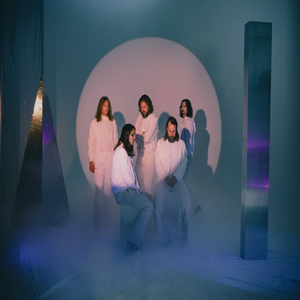
With “Panorama,” Hällas have reached a decisive point in their artistic journey, delivering an album that feels both definitive and exploratory. The record consolidates their unmistakable identity while pushing further into conceptual depth, compositional ambition, and sonic refinement. In this interview, we delve into the band’s origins, their evolving musical language, and—most importantly—the creative process behind “Panorama,” an album that stands as one of the most compelling statements in modern Progressive Rock.
Answers by Tommy Alexandersson — Bass & Lead Vocals.
Hällas have evolved remarkably since your early days. Looking back at the band’s formation, what was the original artistic vision, and how closely does today’s Hällas still align with that initial idea?
I don’t know if we had a real idea about what we were going to be in the beginning. I think we just wanted to play rock music, create music, and have fun. And I think we’re still having fun today creating music, and of course we have grown a lot since the beginning, which is really fantastic. We didn’t have any real goal in the beginning, but where we are right now, I’m really happy.
Your sound blends classic Progressive Rock with Heavy Metal, Folk, and Psychedelic elements. Were these influences present from the start, or did they emerge organically as the band matured?
In the beginning, rock music was the main theme for us. Of course, we listened to a lot of heavy metal, blues rock, folk music, and psychedelic music. But I think progressive rock was what I had listened to the least — I wasn’t really familiar with it. Maybe the most progressive band I had heard in the beginning was Queen or something. So the progressive side of Hällas is the influence that came last. As we created music, I think we were drawn towards it organically.
Sweden has a strong Rock and Metal tradition. How much has your local scene shaped your identity, and how consciously do you see yourselves as part of a broader Scandinavian lineage?
I live in Jönköping — it’s a small city, about one and a half hours from Gothenburg and three hours from Stockholm and Malmö. There wasn’t really a local scene here, but in the south of Sweden there was a scene, of course. It started, I think, with Graveyard, who have been a really important band for me, because they brought me back to traditional rock music. My taste in music evolved during my teens, and at some point when I was listening to a lot of new metal, I was longing back to the roots. When Graveyard started this scene in Sweden, I saw that people could still love the old style — the music that I had liked from the beginning. There was a really nice scene in Sweden from around 2008–2010 to 2020, maybe. A lot of bands — of course in Gothenburg, but also in Stockholm. Today many of those bands are gone, which is really sad. I hope that when people look back on this era, maybe we are included in this Scandinavian lineage of bands that created music with real roots.
“Panorama” feels like both a consolidation and an expansion of your musical language. At what point did you realize this album needed to go further than your previous works?
From the beginning we knew that the next album was going to be something different. I think of the story behind Rush’s 2112 — they had tried and didn’t really succeed, and then they said, fuck it, we’re going to do something really crazy. They did 2112 and exploded. I think we approached this album in that same spirit. We had lost our guitar player Alexander, changed to our own record label.. We had done some good records — but it was time to evolve the sound of Hällas. So very early on, we had all decided we were longing to explore something we hadn’t done before.
“Above the Continuum” opens the album with an ambitious 21-minute composition. What made you decide to place such a monumental track at the very beginning, rather than letting the album build toward it?
The normal thing would be to have this long, grandiose track at the end — and we felt that if we did that, we would be doing exactly what Rush, Yes, or another progressive band had already done. So why not place that song at the very beginning? Why not open the album, tell much of the story right away, and give richness to all the songs that follow? We wanted to do the opposite of what you’re supposed to do.
Keyboards play a central role throughout “Panorama,” from organ and Moog textures to more modern electronic shades. How did you work on defining the keyboard palette for this album?
The keys and keyboard playing that Nicklas has brought to Hällas have become more and more significant through the years, and today they have a bigger role than ever. In the beginning we were more like Iron Maiden — twin guitars — and the keyboards just added a little bit of flavor. But we wanted to do something different. Instead of twin guitars, maybe the Moog could carry the melody alongside one guitar while the other guitar player played rhythm. We wanted to step away from what was expected. That approach creates a really unique sound, and it gives us so many more possibilities — the keyboard or synthesizers can handle the bass, the bass guitar can play a melody, the synthesizer can do string harmonies or something entirely else. The keyboards were really important for this album, and Nicklas did a tremendous amount of work. He’s a truly great musician, and he often plays things that the rest of us couldn’t have come up with.
Tommy, your vocal performance feels particularly dynamic and expressive here. How do you adapt your vocal approach to such varied material, especially within extended compositions?
This album has been the most difficult material to write lyrics and melodies for. But much of the music was already made before I created the vocal parts, so I listened a lot to the tracks, went into my own world, and tried to come up with melodies and words. I felt like I had a lot of space to do many different things — the music is very dynamic, and I could really express different styles on this album and extend my own boundaries. It was really fun to write lyrics for this record. I had a story in my head that gave the words somewhere to go. It was hard at the same time, but the pieces of the songs came very naturally.
“Face Of An Angel” has a more immediate, almost Prog-Pop sensibility. How important is contrast within an album like Panorama, especially when surrounded by longer and more complex pieces?
I love the old albums that are broad and have a wide spectrum of different sounds. Take Volume 4 by Black Sabbath — you have the heavy songs that are unmistakably Black Sabbath, but you also have calm songs, ballads, instrumental passages, more psychedelic sounds, and orchestral moments within a heavy track. I don’t want to listen to an album that has only ten hard songs that all sound the same. I love to hear what a singer and a band can do across the full range — very hard, very soft, very dramatic. I think we really showed many sides of Hällas on this album.
“The Emissary” expands on melodic ideas while introducing heavier textures and electronic nuances. Was experimentation a guiding principle during the songwriting sessions for this track?
I think it was Rickard who first brought in the main riff to The Emissary. For me it was a bit puzzling at first! Kasper plays a fairly straightforward drum beat over it, but the riff itself is not straight at all. It was very hard to learn and understand. But when we did, Kasper and I found this groove, and Marcus and Rickard could play around with the riff and do their thing and we created something that was really nice, even without it being straight. That was really fun. Experimentation is always important to me, because it opens paths I couldn’t think of alone, paths I can only reach by holding my bass guitar or playing with another musician. That’s what keeps music alive.
“Bestiaus” stands out as the most introspective and restrained moment on the album. What role do quieter, darker pieces play in the overall emotional balance of “Panorama“?
I wrote that song on my piano, and it came to me very naturally. It’s actually only me playing on the track , piano, synthesizers, choirs, everything. Even though it wasn’t originally written as a Hällas song — it was written as a Tommy Alexandersson song — I’m really glad we included it. The first track is very heavy in the sense that there is so much music to digest. Bestiaus, with its calm and dramatic quietness, is where you can rest your head a little bit, think about what you’ve heard before, and contemplate. It has a real purpose in the arc of the album.
“At The Summit” closes the album with a sense of ascension and resolution. Did you conceive it specifically as a concluding statement, or did its role emerge later in the album’s development?
I don’t think At the Summit was written as the ending of the album — it became that when we had all the different tracks together. But once we decided it should be the last song, I wrote the lyrics as a closing story. I really love that song. The first guitar part was something I had always wanted to do. Rickard plays this instrumental section with really beautiful strumming and picking, full of melodies. And then the whole rhythm section and the guitars just speed away into the horizon, moving into a part that is heavy and slow and fast all at once. I hope it will become a classic Hällas song.
From a production standpoint, “Panorama” sounds rich yet organic, detailed without feeling overworked. How did you balance clarity, warmth, and power in the studio?
All the mixing and recording is the work of Nicklas, and he has a really good ear and great taste. Those words, clarity, warmth, and power, are exactly what makes a timeless production, and that’s always what we’re aiming for. The music and the instruments should sound real, not digital. If you compare this album to Isle of Wisdom, I think we really nailed the production on this one. We’ve had some comments, some people felt the vocals were quite low, or that certain elements were hard to hear, and I can understand that. But as a band, we were all aligned on how this album was going to sound, and I’m really proud of it.
Your recent tours in Latin America and North America seem to have been pivotal experiences. How have these live journeys influenced your confidence and cohesion as a band?
Just to go to Latin America and North America as a band from the north of Scandinavia, it’s a dream come true to reach those countries, to have shows there, and to see people show up. We had a lot of sold-out shows in both those continents. When we were standing in a garage playing Black Sabbath and Deep Purple covers, I could never have imagined that we would one day tour Latin America and North America. It’s been very important for us to see that we have an audience and fans all over the world. Hopefully when we go back, they bring a friend, and we can grow and play bigger shows. I’m really looking forward to returning to all of those countries and reaching new ones we haven’t been to yet.
With Panorama‘s complex arrangements and extended tracks, how do you approach translating this material to the stage without compromising its intensity?
It’s quite a challenge. Above the Continuum, for example, is very hard to do properly live the way it is on the record. We can’t bring an orchestra, a string section, horns, or trumpets. That’s simply not possible. But we try our best. We’ve played almost every track from the album live now, and we’ve actually added more instruments on stage. I’m playing synthesizers at the same time as I play bass guitar and sing. Marcus sometimes switches between a string machine or synthesizers and rhythm guitar. Nicklas has also added synthesizers to get as close as possible to what you hear on the record. But live is live and record is record. We’re doing our best to make it sound fair.
Looking at today’s Progressive Rock scene, where do you see Hällas positioned within it — and how do you envision the genre evolving over the next few years?
I think progressive rock will gain popularity again. I really hope so. For many years now, popular rock music has been very straightforward and simple. I believe people want more. They want harder things to listen to, different stories, other ways of expressing music. In my opinion, we are not a traditional progressive rock band. We have progressive elements, but compared to Dream Theater or those kinds of bands, it’s very different. For me, progressive music stands for high standards, skilled musicians, complex compositions, and distinctive songwriting. I hope we can be a part of that scene and I think people will come to this music and enjoy it more and more in the near future.
With “Panorama,” Hällas confirm themselves as one of the most vital forces in contemporary Progressive Rock, capable of honoring the genre’s heritage while pushing its boundaries forward. The album is not just a creative milestone, but a statement of intent—bold, immersive, and deeply personal. As the band continues to expand their horizons on stage and in the studio, “Panorama” stands as a powerful testament to where Hällas are today, and a compelling promise of what lies ahead.
Purchase “Panorama” here: https://shop.hallasband.com/
Read our Review of “Panorama” here: [Review] Hällas – Panorama