

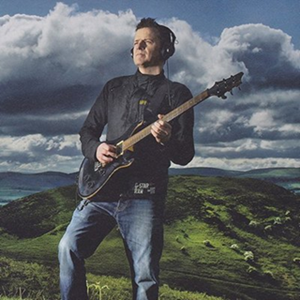
With their tenth studio album “Tarot” set for release on April 10, 2026 via Tigermoth Records, Magenta return as one of the most consistent and emotionally powerful forces in the British Prog Scene. We sat down with founder, composer and multi-instrumentalist Rob Reed to talk about the band’s origins, their musical evolution, the making of “Tarot,” and a cast of guest artists that reads like a prog dream team — including Nick D’Virgilio (Big Big Train, Spock’s Beard, Steve Hackett), Peter Jones (Cyan, Tiger Moth Tales), Steve Balsamo and more. A full review of the album is coming soon — for now, let Rob tell the story himself.
Magenta has been active for over two decades. Can you take us back to the very beginning — what was the original vision, and how did the band first take shape?
We started the band back in 2000. At the time PROG was a dirty word, nobody wanted to be prog. Me and Christian the singer had just come out of trying to be Pop Stars, and had enough of that. I decided to make a double album , which would be very PROG. I didnt pan to do it live. When the album came out it got great reviews and we were asked to do a concert in Mexico. SO I ha dot put a band together. Magenta was born.
The core of Magenta has always revolved around you as composer and producer, with Christina Booth as the unmistakable voice of the band. How did that creative partnership develop over the years, and how has it shaped the Magenta sound?
Christina Ive known for years, when we did a pop project, that we both fronted. Chris joined the Live Magenta band, after guesting on Revolutions our first album. Both didnt come a Prog Rock background, so it was great to have their enthusiasm . This really shone when we played live, as most prog bands were very serious. We like to enjoy ourselves when we play live. I think Magenta songs come alive when we perform them live Chris Fry has become an increasingly central figure in the band’s lineup. How did his role evolve within the Magenta universe, and what does he bring to the table that’s unique? Chris is an amazing electric guitar player, and has lots of influences, like Jeff Beck. He is also an
amazing Classical guitar player, being able to read music and understand both rock and classical world. He brings both of these to the table, along with enthusiasm and performing antics when playing live Magenta’s sound has always been rooted in symphonic and Neo-Prog, but each album has had its own character.
Looking back at your discography — “Seven,” “Home,” “Metamorphosis,” “The White Witch” — how do you see the band’s evolution, and where does “Tarot” fit in that arc?
I like to vary each album. Revolutions the first album was Prog with a capital P. 4 25 minute songs , and a big concept. Then Home album was more song based, bringing influences from classic rock song writers like Leton John. Metamorphosis was a hard angular album. So I like to vary it for each album. I would get bored if they all sounded the same. The new album Tarot, takes us back to the original concept of what the band was about. I love the band Renaissance and ELO, both match a orchestra with rock band. This is very to the for with the new album, but having more of rock uptempo feel than previous album. I think its teh most consistent and cohesive Magenta album. Almost the 1st complete Magenta album.
You wear many hats in Magenta — composer, keyboard player, bass player, producer. How do you manage to maintain a coherent artistic vision across all those roles without losing perspective on the music?
Im furthermost a producer song writer. I have to be able to stand outside the music and listen to it as an outside. Im very critical of the music and performance and want every minute to matter to the overall sound. I love playing all the instruments,. Especially the bass on this album. I love Chris Squires playing and having the bass upfront.
“Tarot” is your tenth studio album — a significant milestone. When did the idea for this album first emerge, and how long did the creative and recording process take?
I wanted to mix the vocals of Christina and Chris guitar with an orchestra. So once I new what the style was going to be I wrote 6 songs in 2 weeks. They were very rough and had no words, just backing tracks and rough non sense words.
The “Tarot” concept is rich with symbolism and archetypal themes. Why Tarot? What drew you to these specific Major Arcana — The Lovers, The Magician, The World, The Empress, Strength — as the conceptual backbone of the album?
Once I had the demos, I played them in the car and thought what person and era they reminded me of. I had six characters. Houdini , Mary, Guinevere, Mozart. Etc. I went to my brother who writes the lyrics, and he went away and found a back story for each character, that wasn’t the normal. Then we looked for a Tarot card to that best suited what happened in their lives. I always like to have a concept for the albums.
The tracklist alternates full songs with shorter Etudes — four of them. What role do these pieces play in the album’s flow? Were they composed as connective tissue, or do they carry their own independent meaning within the concept?
When I played back the album, I thought it was too intense. So I asked Chris , who played classical guitar, to take the themes of each track and write a 30 second short Etude. This is a great way to rest your ears in between each track, so that you are ready for the next epic.
You’ve said that “Tarot,” the title-track, was written towards the end of the album’s creation, once the concept was fully defined. Is this typical of how you work — concept first, or music first? How did the sequence of composition unfold for this album?
The title track was written because I originally took off one of teh tracks as I thought it wasn’t as good, but when I came to actually work it up as a bonus track it had become the best track of album, so it had tot go back on the album, and I took another track off.
The title-track closes the album, and you’ve described it as a moment of respite after five intense and dense tracks. Was that dynamic — tension and release — a deliberate architectural choice for the whole album, or did it emerge organically?
I really value the album listen as a concept. To listen from end to end. With the title track, the end track of teh album, I knew it had to make you want to go back for more.It ends with a great vocal performance followed by a great guitar solo.
Nick D’Virgilio plays drums on “Tarot.” He’s one of the most respected drummers in the Prog world — his work with Big Big Train, Spock’s Beard and Steve Hackett speaks for itself. How did his involvement come about, and what did he bring to the recordings?
I worked with Nick on a charity single I produced of Steve Hacketts Spectral mornings. So I new Nick. I love working with great drummers, and on this album he brings a great energy, that we havent had on earlier album.
The-title track features three vocalists — Christina Booth, Steve Balsamo (your Chimpan A collaborator) and Peter Jones (Cyan, Tiger Moth Tales). That’s an extraordinary vocal lineup. How did that closing moment come together, and what was it like hearing those three voices together for the first time?
I new the Title track, needed something special as a climax of the album. I reached out to Pete, who sings on my other bad CYAN. He sent his parts over, then I asked Steve who sings on my Chimpan A project to do harmonies. Its a very special part of the album, with the three voices together.
Katie Axelsen on flute and Sam Baxter on oboe give the album a very particular orchestral texture. How did you approach the use of woodwinds in the arrangements, and how do they interact with your keyboard work?
I wanted the classic solo parts to be real. We have played live with these players for many years. Its just adds so much to the feel, when its real.
The album will be released with a DVD featuring 5.1 DTS and Dolby Digital mixes, promo videos, live acoustic videos and interviews. In an era of streaming dominance, why was it important to you to deliver “Tarot” as a full physical, multi-format experience?
Im a fan of the physical product. I think it eakesthe listener value it more and therefore give it more attention, when you have payed for the product. Also I really like doing the deluxe editions, that excited me as if I was a fan. I want the listener to have as much value for money as possible.
Is there a track on “Tarot” that surprised you most during the making of the album — one that evolved in a completely unexpected direction from its original conception?
The world is my favorite track on the album. It just had so much work on it, re writing it, that it really came to like, It has all the best bot of Magneta.. Great solo’s and playing and great vocals.
You’ve announced two intimate shows in April — London’s Camden Club on April 25 and Southampton’s The 1865 on April 26. The format sounds unique: acoustic first half with conversation about the album, electric second half — plus an opening set by Chris Fry. What’s the thinking behind this format, and what can fans expect from these evenings?
We want these to stand alone shows, more intimate, where we can play tracks in various formats to suite the occasion. Its also a chance for the three of us to meet the fans and discuss the new album We’re planning some bigger shows next year where we can play the new album with a smallorchesbtral ensemble.
Rob, on behalf of Progressive Rock Journal and our readers worldwide — thank you for your time and for twenty-plus years of extraordinary music. We look forward to “Tarot,” and to many more chapters of the Magenta story.
Get London tickets: https://wegottickets.com/f/16327
Get Southampton tickets: https://wegottickets.com/event/692442
Pre-Order “Tarot” on Bandcamp: https://magenta.bandcamp.com/album/tarot