

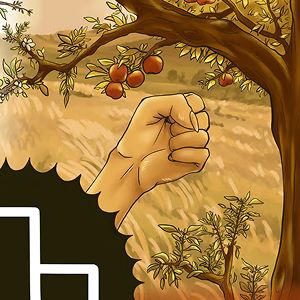
The story behind Unité Douleur‘s name is as honest as their music. Dino Van Bedt has recounted, in interviews with our pages, how the title crystallised during a long, uncertain wait in a hospital corridor. What struck him was the ward sign, Unité de Douleur, the pain-management unit, and the quiet, almost accidental poetry of the phrase in French. Unité: unity, a collective holding. Douleur: the wound each of them carried individually. The band’s identity was born in that intersection: four people bringing their own specific pain to a shared table and building, out of it, something that belonged to none and all of them at once. That philosophy has been the through-line of their short but remarkably deliberate catalogue. “Below Zero” (November 2025) was the anesthetic, the initial numbness, the cold that makes you feel nothing at all. “Pollen Haze” (March 2026) broke the thaw, it was the jarring, uncomfortable reopening of wounds you thought had sealed, a record we covered here at PRJ and whose standout track “Bag of Nails” went on to earn a place on the “PRJ Compilation Vol. XIV: Forests of the Ancient Mind.” Now, with “Sun Burns,” released on September 30, 2026, the quartet arrives at the third season of that arc: not the comfort of warmth, but the heat. The kind that presses down, that makes the skin sting and the memories suppurate. Their own motto for the record says it plainly, in a bilingual couplet that reads like a weather report for the psyche: “Un soleil écrasant // Le sang coule et sèche // Les souvenirs suppurent.” An oppressive sun. Blood that flows, dries, and then the memories go septic. There is no pretension in that line, and there is none in the music. “Sun Burns” was recorded in the band’s home studio, a space they call Room 101, a name that, depending on your literary disposition, either sounds clinical or quietly ominous. The choice to keep the sessions in that rehearsal-room environment is deliberate: the take is live, the breathing is audible, the imperfections are not sanded away. What is polished is the finishing. Mix and master are again in the hands of Jack Bowman at BAY Custom Studios, a collaboration that gives the EP a sonic continuity with their previous work without flattening its edge. Claire Leloire‘s artwork complements the record’s visual logic. Sonically, Unité Douleur occupy a specific and increasingly rare space. Their palette stretches from the widescreen dynamics of Atmospheric Alternative Rock and Post-Metal into the angular, nervy territory of Post-Punk. The references are transparent but never servile: the textural weight of Deftones, the relentless low-end pressure of Neurosis, the melodic knife-edge of The Cure. What they do with those references is their own, filtered through the French language, through a baritone-and-tenor vocal pairing that gives their phrasing a quality of quiet confession rather than projection. Four tracks. Twenty-four minutes. No filler, no false movement. Let’s walk through them. The EP opens with its most imposing statement “Ash Dwellers,” nearly seven minutes of broad, slowly unfurling dynamics that refuse to resolve early. The architecture is built on the interplay between JF Hamel‘s lead guitar lines and Dino Van Bedt‘s rhythmic foundation, two guitars in constant conversation, neither simply serving the other. Vocally, the interplay is equally precise: Van Bedt‘s baritone sits low and textured, occasionally fracturing into a rougher register, while Hamel‘s tenor slides in to complete a phrase, to fill the space the baritone leaves open. The result is a vocal dialogue rather than a solo delivery. Lyrically, the track is a homecoming that finds nothing left to find. The narrator returns to the place of origin and discovers the childhood house razed, burnt, gone. “Where it began, the house we grew in / Razed to the ground, everything burnt down.” What follows is a pilgrimage through that ash—searching, the lyric insists, for a truth that is “buried in the ashes.” It is not a triumphant return. It is a man kneeling in rubble, picking up pieces, trying to read the words that were on the walls. And yet, the closing movement shifts: “Here we are now, taking a new vow / We’ll build a home, a place of our own / Forget the shame.” The promise is fragile, barely a whisper over the final chord, but it is there. The track does not resolve into catharsis. It resolves into intention. After the expanse of “Ash Dwellers,” the EP drops you into a pressure chamber. Under three minutes, “Wear the Scars” is the shortest and most direct piece on the record, and its brevity is the point. There is no ramp-up, no Atmospheric bed. The rhythm section, PA Grenier‘s bass and Louise Niez‘s drums, locks into a tight, forward-driving pulse that feels claustrophobic, almost aggressive in its insistence. The space between the kick and the snare is narrow. There is nowhere to hide. The vocal delivery shifts accordingly. Van Bedt‘s phrasing becomes more clipped, more confrontational. The subject is guilt and shame, described not as abstract feelings but as physical presences: “The guilt is stifling… The shame is suffocating, boiling within.” The central metaphor is repeated with the deliberate weight of a hammer strike: “One more rock stacked up on my chest.” Each repetition adds mass. You feel the compression. The chorus lands like a verdict rather than a release: “You hold the cards / I wear the scars.” Asymmetry. The other person deals; you take the damage. It is the EP’s most distilled, most pointed statement, and it hits hardest precisely because it lasts the shortest time. At over seven minutes, “Sand Castles” is the EP’s longest track and, in terms of compositional ambition, its beating heart. The style here is the one most clearly identifiable as Post-Rock/Atmospheric Metal in the band’s palette, a slow, hypnotic build in the guitar textures, layered and circular, before the track breaks open into sudden, full-volume surges that evoke less a climax than an approaching storm you can see on the horizon but cannot outrun. The setting is explicit in the lyric: “I wander forever under a scorching sun.” The protagonist is not moving. They are circling. The central image, “Drawing circles in the sand / Building castles in my head,” is deceptively simple. It is the act of constructing meaning, narrative, self, in a medium that will dissolve the moment a wave comes. And the wave always comes. “My fragile structures swept away into the storms.” The track hovers, in its final minutes, between two impulses: the desire to simply vanish, to let the sun take the rest, and the grim obligation to wake up and face another day. Neither wins. The tension is the point. Musically, the piece is rich with tempo shifts, accelerations, halts, a change in feel that keeps the listener slightly off-balance, mirroring the lyric’s circular restlessness. The interplay of Heavy Rock riffing and Post-Rock textural washes is handled with a confidence that suggests a band comfortable in both registers simultaneously. The track closes through an extended instrumental passage that puts the guitar foreground, Hamel and Van Bedt trading phrases over the rhythm section’s sustained pulse, before the final vocal verses pull the sound back into a denser, more Atmospheric register. The last note hangs. It does not fade. It stops. The EP’s finale is its most theatrically layered, and perhaps its most unsettling. At roughly six and a half minutes, “Prayers” leans fully into the vocal architecture Van Bedt has constructed in the studio: stacked, interlocking harmonies that create a sense of a single voice multiplying, fracturing, becoming a chorus of one person. Over those vocal layers, the instrumental work builds in sharp, almost surgical crescendos, guitar and bass cutting through the harmonic bed with a precision that feels surgical rather than organic. The lyric concerns faith that does not comfort. “My prayers ignite, and I burn my hands.” The reaching-out is also the self-harm. The will is described as a razor blade; love as “a shovel, and I bury my heart.” These are not metaphors for distance. They are metaphors for proximity so intimate it becomes violence. And then the track’s final movement introduces the other, a figure who is not separate from the speaker but of them: “And I’ll wear your skin / And I’ll become you / And you’ll become dirt / And you’ll become me.” The boundary dissolves. The self and the other compost into the same ground. The song ends with a sense of suffocation, of the journey closing not with an answer but with the prayer finally finding its response, and that response being silence, or weight, or the simple, inescapable fact of continuing. “Sun Burns” is the third movement in a conceptual arc that Unité Douleur have constructed with unusual discipline for a band of their size and stage. From the anesthetic freeze of “Below Zero” through the painful thaw of “Pollen Haze” to the searing, inescapable heat of this record, the through-line is clear: suffering is not a story you tell. It is a temperature you sit in. And the music is the way you sweat it out. What keeps the EP from becoming merely Atmospheric, merely a sequence of beautiful noise, is the band’s consistent refusal to over-engineer. The Room 101 recording is present in the mix: you hear the room, the slight bleed of drums into the vocal mics, the way a guitar amp is allowed to ring into the next phrase. Jack Bowman’s mastering gives it sheen without erasing that grain. The result is a record that feels played rather than produced, and in a landscape of increasingly slick alternative metal releases, that distinction matters. In previous conversations with our pages, the band have been unambiguous about what they are after. The goal is not formal perfection. It is not a demo of technical mastery or a showcase for production polish. The goal, in their words, is to deliver something “human, sincere and imperfect.” “Sun Burns” achieves that with a directness that almost defies the genre conventions it borrows from. The Deftones texture, the Neurosis low-end, the Cure Melodic nerve, all of it is subordinated to the vocal line, to the lyric, to the specific and often uncomfortable feeling the singer is trying to externalise. The sun, in the world of this record, is not a benevolent force. It burns. It reopens the scab you thought had sealed. It makes the blood run and then dry and then the memory go septic beneath the surface. And yet, this is the argument the music makes, track by track, from the vow in the ashes to the prayer that burns the hand, pain is not a terminus. It is the ground. You do not get past it. You build on it. You stack the rocks on your chest and you learn, somehow, to stand. If it is true, as the old adage goes, that pain is human, then the music of Unité Douleur demonstrates, with a force and a specificity that few bands in this corner of the scene manage, that healing is too. Not the clean, narrative healing of a movie’s final act. The rough, incomplete, still-burning kind. The kind that leaves a scar you wear anyway.
Tracklist
01. Ash Dwellers (06:56)
02. Wear the Scars (02:59)
03. Sand Castles (07:20)
04. Prayers (06:27)
Lineup
JF Hamel / Lead Guitar & Vocals
Dino Van Bedt / Rhythm Guitar & Lead Vocals
PA Grenier / Bass
Louise Niez / Drums
Read our recent interview with the band here: [Exclusive Interview] Unité Douleur: Pollen Haze, and the Architecture of Feeling