

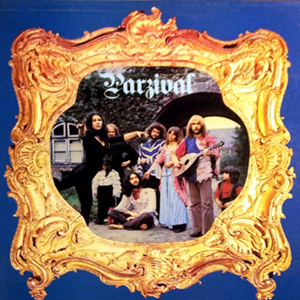
Bremen, West Germany, 1965. In the vast and often chaotic landscape of Seventies Krautrock — where motorik rhythms and Electronic Experimentation dominated the scene — there exists a quieter, almost pastoral corner, occupied by a singular sonic entity: Parzival. Originating from Bremen, this band did not merely follow the trends of the era, but forged a genre almost entirely their own, defined by critics as “Kammerrock” (Chamber Rock) or Baroque Rock — a form capable of fusing avant-garde pop with classical and medieval music.
— From Beat to the “Beazzic Conservatory” —
The story of Parzival takes root in 1965, when young students Lothar Siems (guitar and vocals) and Thomas Olivier (drums and vocals) founded the beat group The Chamberlains. After the band dissolved in 1967, the two continued as a folk duo under the name Tom & Cherry, beginning to compose original material that already showed the first signs of a more complex sonic search.
The real turning point came in the autumn of 1967 with the arrival of Walter Quintus, a classically trained multi-instrumentalist (violin, bass, piano) who brought a new intellectual depth to the project. Together with a cellist, they formed the Quintus Quintet, debuting at the legendary Lila Eule club in Bremen with a style that had no equal at the time.
Before settling definitively on the name Parzival, the group went through a crucial transitional phase under the name Beazzic Conservatory — a term coined to describe their fusion of Beat, Jazz, and Classic. In 1969, with the addition of flautist Matthias Müller-Menckens, the sonic vision was complete. However, their international ascent suffered a setback when, following demo sessions at the prestigious Decca Studios in London with producer Glenn H. Friedman, the British musicians’ union barred them from any further engagements on English soil.
— Conny Plank and the Masterpiece “Legend” —
In 1971, the band’s destiny intersected with that of a legendary figure in German production: Conny Plank. Under his guidance and with the new name Parzival — inspired by the hero of the Arthurian cycle — the band signed with Teldec and released their debut album “Legend” on the Telefunken label.
The album was a revelation. Contemporary press described it as a work that unveiled “a mysterious dreamlike world with a classical breath” thanks to a layered and complex instrumentation. Even global icons such as former Beatles George Harrison and Ringo Starr praised its value, and the magazine Petra included it among the records of the year. The international press, led by the prestigious Melody Maker, identified Parzival as “the secret tip of the pop season”, lauding their light, airy and pastoral approach.
During this period, Parzival succeeded in bridging the gap between the boldest Psychedelia and Classical concert music, becoming pioneers of a genre whose European counterparts were found in bands such as Procol Harum or Renaissance.
— BaRock and the Premature End —
In 1972, the band expanded with the arrival of cellist Walter von Seydlitz, consolidating the lineup as a quartet. That same year, Parzival were protagonists of what is considered one of the first music videos ever broadcast on German television. The second album, significantly titled “BaRock” (1973), pushed their fusion of Rock and Baroque idioms to its furthest extreme, confirming the critical appreciation for their avant-garde “Classik-Folk-Rock.”
Despite their critical success, internal tensions stemming from the young age of the members — barely in their twenties — led to the band’s dissolution in 1973. Thomas Olivier, years later, would recall with regret how “they clashed over every trivial thing”, bringing a premature end to one of West Germany’s most original projects.
— Silence and Digital Rediscovery —
After the split, Parzival‘s legacy survived through a series of reissues and compilations. In 1975, the anthology “A German Rock Legend” appeared, followed in 1981 by a volume in the “Rock in Deutschland” series. It was only in 1998, however, that audiences could rediscover both original albums in remastered CD format — receiving fresh praise from specialized press such as Rheinische Post, which described their music as “exciting and multifaceted.” In the years that followed, labels such as Sireena Records returned the original works to vinyl, allowing collectors to once again appreciate the analogue warmth of those compositions.
— The Impossible Return: “David – The Hymn” —
Against all expectations, nearly fifty years after their dissolution, Parzival returned to the scene in 2022. Co-founder Thomas Olivier, together with producer Dieter Faber, gave life to a monumental project: “David – The Hymn.”
This was no mere nostalgia operation, but a double concept album involving 130 musicians from 23 different countries. The production featured members of the NDR Elbphilharmonie Orchester, the Festspielorchester of Bayreuth, and even percussionists from the national ensembles of Côte d’Ivoire and Benin. Thematically, the album revisited the civic engagement already present in the band’s historical material — such as the anti-Vietnam War statements in “Senseless No. 6” — now confronting the climate crisis, the refugee crisis, and the abuse of power. The narrative follows protagonist David, a composer hired by a media magnate to write an electoral anthem, who ultimately uncovers his patron’s dark intentions.
The press response to this return was enthusiastic. Weser Kurier spoke of a “thunderous comeback”, while Musik an sich described the event as an even greater sensation than the return of ABBA. The new Parzival sound remains faithful to the original spirit: a fascinating blend where flutes, French horns, and strings underline a Folk and medieval approach, now enriched by Arab and African rhythms.
Watch the Germany’s first ever music video with Parzival:
In February 1972 German Ufa newsreel produced film clips of Parzival´s songs at the castle Ahrensburg near Hamburg (Germany). According to the NDR these were the first German music videos and they were to be shown in more than 3.000 cinemas worldwide. Radio stations boycotted some of the songs whose lyrics, condemning the Vietnam war and the nuclear arms race, had sparked outrage among the guardians of public morals.
— Discography —
(1971) — Legend — Teldec / Telefunken (Reissued on CD 1998 — Reissued on vinyl by Sireena Records)
(1973) — BaRock — Teldec / Telefunken (Reissued on CD 1998 — Reissued on vinyl by Sireena Records)
(1975) — A German Rock Legend (Anthology)
(1981) — Rock in Deutschland Vol. ? (Compilation)
(2022) — David – The Hymn (Double concept album — Thomas Olivier & Dieter Faber)
Purchase the double concept album “David – The Hymn” here: https://parzival.lnk.to/david-the-hymn
— Lineup —
“Legend” Lineup:
Lothar Siems / Guitar & Vocals
Walter Quintus / Violin, Bass, Organ & Piano
Thomas Olivier / Drums, Vocals & Percussion
Matthias Müller-Menckens / Flute & Piano
Joachim Reichhold / Cello
Hans Jaspers / Viola
“BaRock” Lineup:
Lothar Siems / Guitar & Vocals
Walter Quintus / Violin, Piano & Organ
Thomas Olivier / Drums & Vocals
Walter von Seydlitz / Cello
Matthias Müller-Menckens / Flute, Piano & Organ
Harald Konietzko / Bass & Vocals